
II.
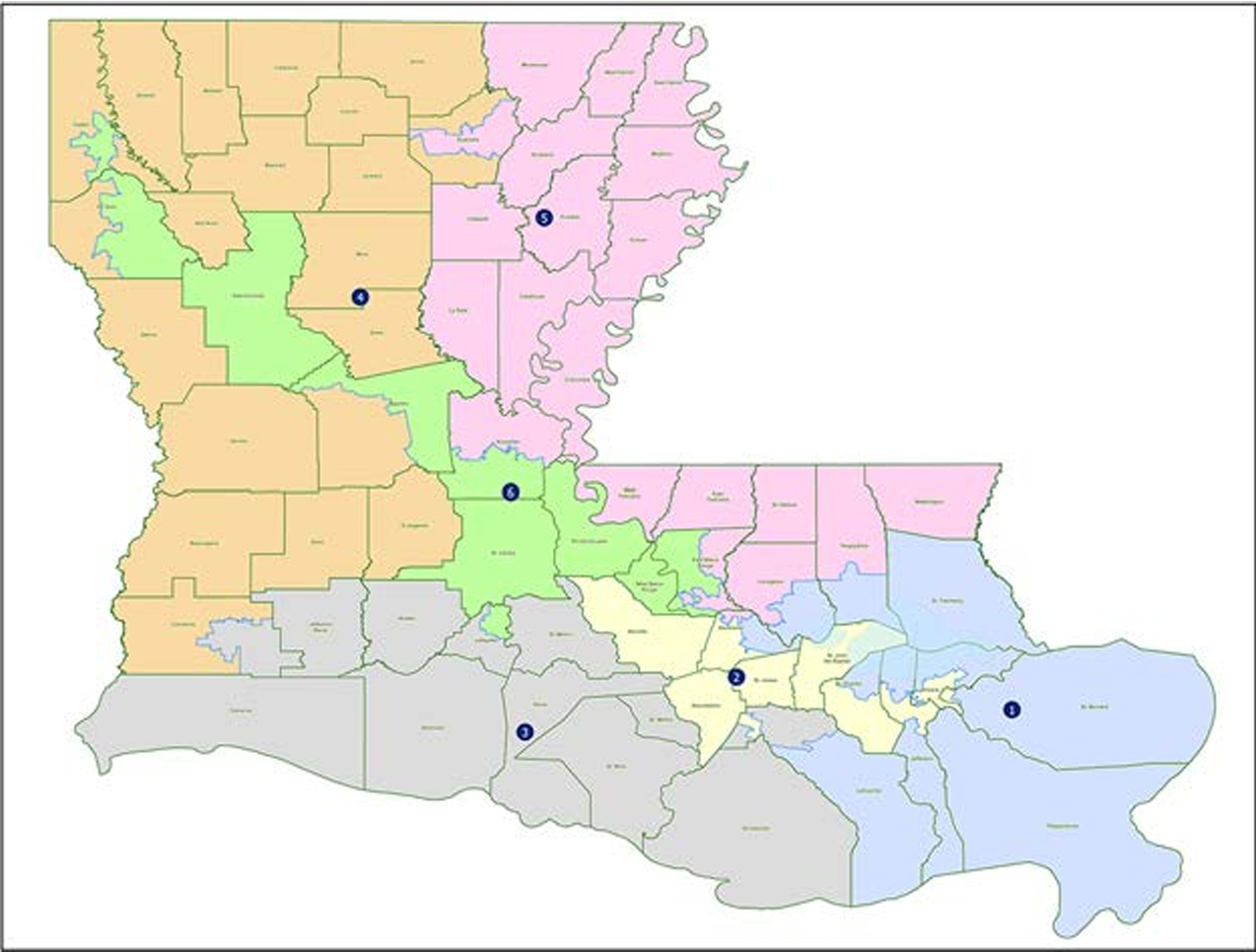
In his Opinion Louisiana v. Callais, Justice Alito writes that the central issue in this case is “whether the Constitution permits the intentional use of race to comply with the Voting Rights Act.” Since Congress expressly created the Voting Rights Act to fulfill its Fifteenth Amendment charge and since the Fifteenth Amendment prohibits the denial or abridgment of voting rights “on account of” race, it is difficult to understand how the Constitution’s Fifteenth Amendment can be satisfied without direct reference to race and thus the “intentional use of race.”
The Justice begins to address this “central issue” “with the general rule that the Constitution almost never permits the Federal Government or a State to discriminate on the basis of race.” That seems correct, and we can certainly read the Fifteenth as prohibiting racial discrimination. Later, this understanding is stated as “the focus of §2 [of the Voting Rights Act] must be enforcement of the Fifteenth Amendment’s prohibition on intentional racial discrimination.” We should return to his emphasis on the word intentional as well as its use in his formulation of the “central issue” because they seem somewhat out of place, an unnecessary addition at this point. Right now, consider the word discrimination.
Justice Alito’s use of the word discrimination, clear as it seems on the surface, hides a serious ambiguity. Its ambiguity allows him to conclude that the intentional use of race to comply with the Voting Rights Act is unconstitutional, barred by the Fifteenth Amendment, and permissible as an exception only under the most restricted conditions.
Ever since the Civil War, Americans have used the word discriminate to mean a prejudicial act against some group of people, mainly African Americans. My 1971 edition of the Oxford English Dictionary does not recognize that meaning as English. The newer versions include that meaning but label it as an Americanism.
Behind that usage, however, we Americans all know that it meant and still means the positive intellectual ability to distinguish, to make distinctions, to have discernment, to be “discriminating.” Does the Fifteenth prohibit making distinctions between races? Is distinguishing between races (even as cultural categories) prohibited the federal government and the states? The question springs to mind because of President Trump’s executive order banning the mention of racial diversity in federal governmental actions. See Ending Illegal Discrimination And Restoring Merit-Based Opportunity – The White House. Notice that Justice Alito’s statement of the general rule that “the Constitution almost never permits the Federal Government or a State to discriminate on the basis of race” can mean that, does mean that in traditional English. Indeed, one might almost think that the Fifteenth Amendment violates what the Justice calls the Constitution’s “general rule.” And, indeed, this is Alito’s aim. It’s a hidden aim, unsaid but operating unnoticed in the background of his argument.
Such a question can arise only in the ambiguous space created between discriminating between races and discriminating against races. Supreme Court decisions fifty years ago (for example Mobil v. Bolden [1980]) clearly distinguished the two meanings. Justice Alito never once in his Opinion uses the phrase discriminate against, always preferring an ambiguous formulation such as racial discrimination.
Changing the Fifteenth Amendment’s clear focus on denying and abridging voting rights to a question of discrimination changes the amendment’s focus (and meaning) to making racial distinctions, thus opening up a space for Alito’s elaborate argument. It’s actually a grammatically incorrect way of reading the text where denied and abridged are the sentence’s predicate, while race appears only in a prepositional phrase.
Racial discrimination (in both senses) is (fuzzily) unconstitutional and therefore only allowed in the extraordinary instances (“compelling interest”). Is complying with the Voting Rights Act a compelling interest? The courts have always assumed so, says Alito, but he will not allow that precedence to stand. I will not follow Alito’s argument, but it winds through the thickets of the meanings of key terms in §2 of the Act and key concepts in the history of the Court’s treatment of the Voting Rights Act reinterpreted in the light of his aim of testing the constitutionality of the Constitution itself.
The Justice repeatedly calls this revised historical narrative “updates,” as he reconfigures and alters former decisions according to recent Opinions (mainly his own and Chief Justice Roberts’), providing us with a chronicle of the gradual dismantling of the Voting Rights Act.
Now we turn to intent and why “intentional” appears so prominently in his beginning statement of the central issue in this case. See above, in the first two paragraphs of this article. Critics have said that the Justice’s transformation of discriminatory effect into discriminatory intentions makes it almost impossible to prove discrimination. Evidence of intent is always suppositional and fades against overtly expressed denial. But we deal with intent daily. How do you understand the punchline of a joke if you are not surprised to find that the joke has been misleading you about the intended punchline all along? How do you know when you have been dissed by a snide remark? Law distinguishes first degree murder from second degree murder by intent. The whole discussion of the unconscious is about the invisible and not physically evidenced causes of our actions. Intent is seen directly in language because language does not only mean what it says. It says what it means, its intent. Its intent is heard in word choice, in how sentences are phrased, how arguments are constructed, how the apparently objective description is colored. This article is about Justice Alito’s intent in his Opinion.
Recall that the Fifteenth Amendment is not about intention: it says that the right to vote “shall not be denied or abridged … on account of race, color, or previous condition of servitude.” Denials and abridgments are actions. The focus is on the acts (the sentence’s main verbs). Speaking of “intention,” thrusts an agent into the picture and makes that agent the center of concern. What is his/her intention? For Justice Alito, the Fifteenth has become a judgment of the character of the discriminator rather than the protector of the discriminated against. This shift matches the shift to the hidden ambiguity of “racial discrimination.” The amendment’s intent is completely undermined and used to limit the Voting Rights Act.
Though Justice Alito’s use of intent functions in the context of this Opinion, his source is Chief Justice Roberts’ Opinion in Brnovich v. Democratic National Committee (2021) which argues against Section 2’s explicit direction to examine the results of action to determine racial prejudice. The Brnovich Opinion was a stance the Chief Justice took as long ago as 1982 when as a young lawyer in the Solicitor General’s office, he opposed the expansion of the Civil Rights Act, stating that it accorded with the views of President Reagan. See the Roberts memo at https://www.archives.gov/files/news/john-roberts/accession-60-88-0498/030-black-binder1/folder030.pdf. With these references, Justice Alito places himself in a grand tradition of opposition to half a century of civil rights advances.
Justice Alito needs discrimination to be intentional because he is working his way to the distinction between politics and race (they must be disentangled, he says). By separating intentional racism from racist consequences that result from actions done for other reasons, he can say that only intentional racial, not partisan, discrimination, is forbidden. And, he needs to say that because Chief Justice Roberts in his 2019 Opinion in Rucho v. Common Cause, said that partisan gerrymandering is a political issue, not discussed in the Constitution and thus not a subject that the federal court can make judgments about. See https://www.theguardian.com/us-news/2025/aug/09/gerrymandering-republican-redistricting, which narrates and demonstrates the effectiveness of the 2008 reinvention of gerrymandering by the Republican Party.
Once Rucho is set into place in Justice Alito’s argument, Section 2’s concern for the discriminatory effects of gerrymandering falls apart. The political aim of partisan gerrymandering can be rescued from the prohibitions of the Fifteenth Amendment and the Voting Rights Act. Partisan gerrymandering can then serve as a race-neutral way for racial discrimination.
Can Justice Alito not see what we all can see, that what he calls disentanglement is a permanent entanglement of race and politics? Diminishing the Democratic vote does, in fact, diminish the Black vote. It may not have been so in the days of the Dixiecrats, but it has been so since the Kennedy Presidency and throughout the era of civil rights. It is so today, still, which is why Republican strategists use gerrymandering.
In so far as politics is about the polis — the national community — and racial issues are about community, the two are intimately entangled. As for the Constitution, it is itself a product of politics, and the three Reconstruction amendments – the Thirteenth, Fourteenth, and Fifteenth – result from the politics of race. It takes a blindfold to not see that. Disentanglement is Justice Alito’s blindfold.
What Justice Thurgood Marshall, dissenting in Mobile v Bolden (1980), said about that case can easily apply to this one: “a plurality of the Court concludes that, in the absence of proof of intentional discrimination by the State, the right to vote provides the politically powerless with nothing more than the right to cast meaningless ballots.”
Thank you for this in depth analysis of Callais. I reacted in a more personal, yet historical way: https://mediaequity.substack.com/p/no-to-jim-crow-20?r=e4n7 I went to what I believe might have been one of the most racially, culturally, and politically rich public high schools of the early 1960s which provides a fundamental piece in my roots. Alito’s decision is faulty is numerous ways. It is a Ferguson misstep of 2026.
Nice Media Equity piece, Ariel. Thanks, for putting it out there. Callais is worse than Ferguson. It’s “separate and unequal.”