
III.
Beneath Alito’s corrective to the history of the Court’s actions run two major currents. The one surfacing at times and overtly stated is that we are not a society steeped in racial prejudice that needs something like the Fifteenth Amendment and the Voting Rights Act. It’s an argument that Chief Justice Robert explicitly made over a decade ago in his Opinion in Shelby County v. Holder (2013) which declared Sections 4 and 5 of the Voting Rights Act unconstitutional because nothing justified their overreach into state sovereignty once the ills of racial discrimination have been successful erased.
Justice Alito follows the Roberts’ argument to the T: assuming that the Voting Rights Act is inherently unconstitutional, its terms are only allowable in extreme situations, and when one can show that such extreme situations (as has occurred in the past) no longer exist, then the act’s baseline unconstitutionality must be recognized. Thus, while the correction of former ills may make Section 2 necessary even if unconstitutional, that “compelling interest,” which would allow an otherwise unconstitutional act, is gone.
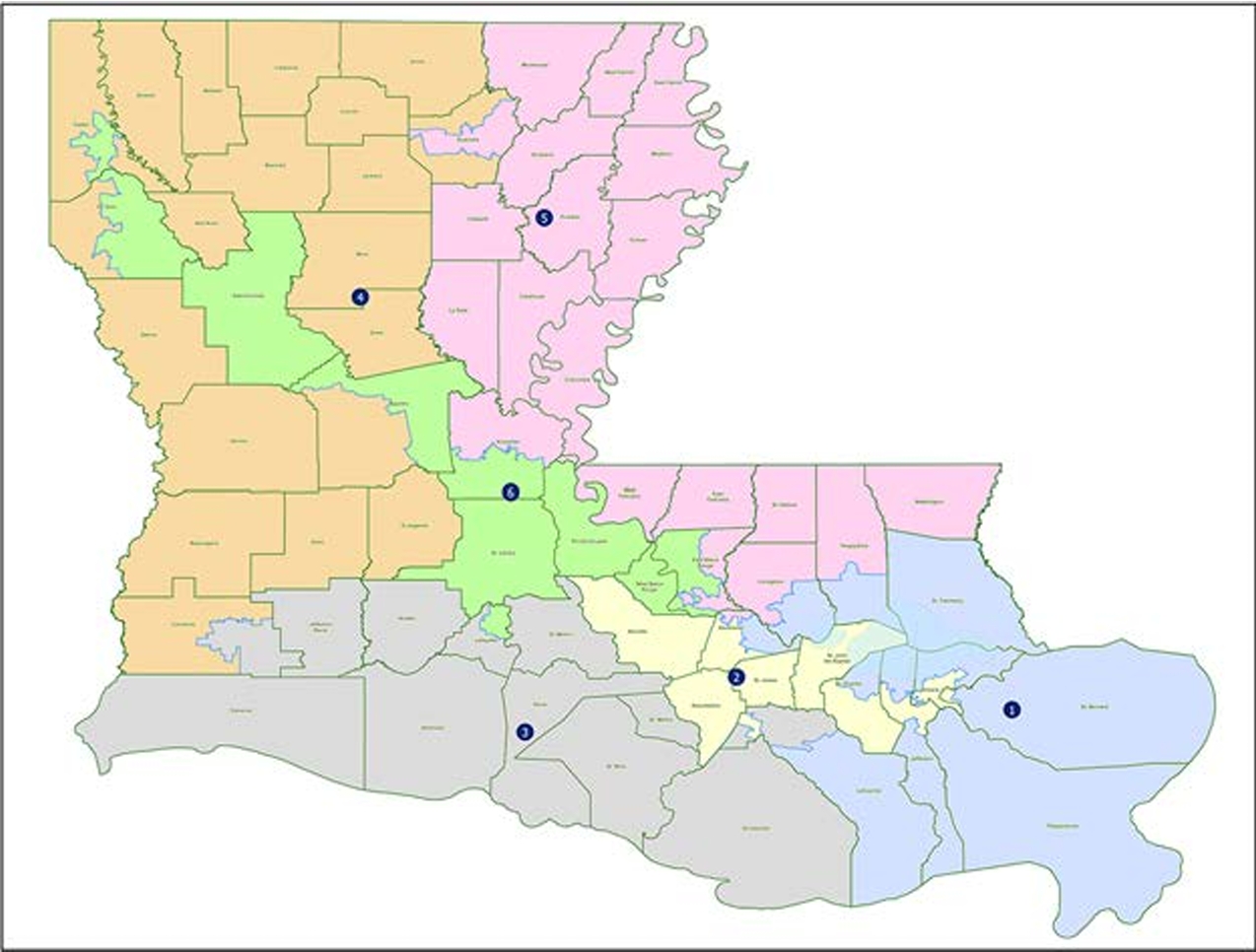
One would expect such an argument depends on factual evidence. Yet, Justice Alito establishes the assumed history of civil rights progress by citing Shelby County’s findings (from a dozen years ago in another state). He dismisses evidence presented from Louisiana in the present case as old hat, depicting a former bad times, and not forward looking, as he claims the Fifteenth Amendment is intended to be. The slight evidence he presents is questionable. He claims that Black voting proportionally surpasses non-Black voting in recent Louisiana elections. But the Justice knows very well, having studied the issue of vote dilution in several cases, that voting numbers are immaterial if their concentration is diluted by racial gerrymandering, which creates voting districts in which black votes are always a minority. Furthermore, it seems the Justice was citing as fact the results of a dubious, possibly deliberately misleading calculation — one of those “true but” facts we see so often these days. A must read, detailed examination of this calculation is given by The Guardian: https://www.theguardian.com/us-news/2026/may/08/supreme-court-voting-rights-act-misleading-data-doj.
The second current that runs through Justice Alito’s Opinion — hidden, unstated, and a logical extension or correlative to the uplifting image of a prejudice free society – is nonsensically called “reverse discrimination.” Articulating the idea in its crudest form, a voter in Pennsylvania said when interviewed at the last presidential election, “we whites are being discriminated against.” If we are a truly egalitarian society, then any attempt to promote the advancement of a minority race or disadvantaged group violates the rights of the majority and the advantaged. This is the claim of Executive Order 14173 (see Ending Illegal Discrimination And Restoring Merit-Based Opportunity – The White House) which revoked the 1965 Executive Order 11246 establishing affirmative action in the federal government. EO 14173 specifically names its object of attack as the Civil Rights Act of 1964, the sister law to the Voting Rights Act (2065), both pushed through by President Lyndon Johnson as a continuation of assassinated President Kennedy’s policies.
I first heard of that term in the 1970s, and in my mind it is associated with the Supreme Court case University of California v. Bakke (1978), where, in fact, the term appears. The Bakke case was the first major and partly successful attempt to dismantle the Civil Rights Act as applied to university admissions. Wikipedia gives an excellent account of the issues, the factual details, and the complexity both of the case and of its decision: Regents of the University of California v. Bakke – Wikipedia.
In short, the medical school of the University of California, Davis, took in its first class in 1968. That first class consisted of 50 students, of which 2 were Asian Americans. There were no African Americans, no Mexican Americans, no Native Americans. Given the social and educational disadvantages for minority racial and ethnic groups, this composition was usual. In the heightened awareness of these societal inequities at that time, as evidenced by the Civil Rights Act (1964) and the Voting Rights Act (1965) which culminated a decade of civil rights activism (“The Movement”), the medical school at Davis sought to correct the imbalance through affirmative actions.
When Allan Bakke applied for admissions (1973 and 1974), the entering class had been increased to 100 students of which 16 places were set aside for disadvantaged students. In spite of many positive aspects of Bakke’s applications, he was rejected both times. Bakke sued on the grounds that the school’s quota system had violated his rights under the equal protection clause of the Fourteenth Amendment. That clause says that no state shall “deny to any person within its jurisdiction the equal protection of the laws.” I said earlier that the Fifteenth Amendment could be seen as a special case of this clause.
The Supreme Court’s discussion included many written exchanges between the Justices as well as conferences and hearings. The Court allowed 58 friends of the court to submit briefs, and the list of these organizations tells a story about the history of minorities in America. The organizations formed for protecting minority rights split. The American Jewish Committee, the Anti-Defamation League, the Queens Jewish Community Council, and the Order of Sons of Italy joined traditional conservative groups (Fraternal Order of Police, the US Chamber of Commerce, the Pacific Legal Foundation, the Young Americans for Freedom) to support Bakke. The University was supported by Black, Chicano, Polish groups along with the Federation of University Professors and affirmative action organizations. It’s a preview of the affirmative action dispute in years to come.
The decision was split. Six different opinions were filed agreeing and disagreeing with different parts of the decisive main Opinion written by Justice Lewis Powell. Five Justices (out of nine) voted to forbid the University’s quota system based on the equal protection clause of the Fourteenth Amendment, but five Justices also voted in favor of the intent of affirmative action and the use of racial categories to achieve that end. “In order to get beyond racism, we must first take account of race. There is no other way. And in order to treat some persons equally, we must treat them differently. We cannot—we dare not—let the Equal Protection Clause perpetuate racial supremacy,” wrote Justice Harry Blackmun.
Justice Powell included an appendix in which he described Harvard University’s admission policy as a way in which universities could improve minority representation in their classes. It may have been an attempt to save affirmative action from his ruling against racial quotas since Justice John Paul Stevens seemed to equate affirmative action with reverse discrimination: “No doubt, when this legislation was being debated, Congress was not directly concerned with the legality of reverse discrimination or affirmative action programs.” Yet, Justice Powell’s example was reversed two years ago by the present Court in Students for Fair Admissions v. Harvard University (2023).
The Supreme Court permanently ended all affirmative action in deciding Harvard. Students for Fair Admissions was specifically formed by conservative activist Edward Blum in order to destroy affirmative action as discriminatory. Blum courted Asian American organizations for support with the claim that at elite private universities affirmative action caused Blacks and Chicanos to take places Asian Americans were entitled to by merit, and the complaint was specifically about discrimination against Asian Americans. See https://www.insidehighered.com/opinion/views/2025/02/17/affir. One can suspect that Harvard was specifically targeted because of Justice Powell’s appendix in Bakke. Note that both Bakke and Harvard pit minority groups who have socially, culturally, and economically “made it” against other minorities, but the resulting beneficiary of both cases is the majority race.
Chief Justice Roberts, in his Opinion against Harvard, concluded that affirmative action in school admissions was discriminatory against Asian American applicants and unconstitutional (Fourteenth Amendment), not just undermining the Civil Rights Act but enabling it to be used against any action based on racial distinction (any discrimination in the old sense). For the Chief Justice this rejection of any distinction made between races seems based on a logic. Any negative use of racial distinction is obviously discriminatory in the bad sense, and any positive use of racial distinction (as in affirmative action) results necessarily in reverse discrimination; so, any distinction at all is not permissible: “College admissions are zero-sum, and a benefit provided to some applicants but not to others necessarily advantages the former at the expense of the latter.” The gap between the two meanings of discriminate has been bridged.
In the next section, we return to Justice Alito and Louisiana v. Callais.