
IV.
Two undercurrents, I claimed, run through Justice Alito’s reasoning in Louisiana v. Callais. One is the notion that America today is free of discrimination, in a state of equity. The other is that in a perfectly equitable world any talk of racial distinction disturbs that equity. Even designating a minority group as a distinct group (discriminating it) discriminates against the whole. The Court’s under-thoughts both flow out of Chief Justice Roberts’ writings. Together in the last three years, the two Justices have permanently erased the two laws that tried to right a wrong that was, and still is (as exemplified by the Justice’s Opinion itself), embedded in our culture. I say “permanently” because their intent is to revise the Constitution and thus to affect future legislative action.
The undercurrents demonstrate the real intent (meaning) of the arguments on the surface. They show that the distinction I made between the two meanings of the word discriminate in Part I is not so fanciful. They demonstrate that Justice Alito was perfectly aware of the gap between those two meanings even as he pretends to mean only one of them. While using the negative meaning he was deliberately moving his argument through that gap towards the positive meaning; so that, it would eventuate in Chief Justice Roberts’ insistence that to distinguish (discriminate) between races is (by the definition of a perfect society) a racial discrimination against the majority race.
When a word has several meanings, we understand its intent by the context. Yet, the other meanings are always available, there in the word, ready to spring into an idea (in either the speaker’s or the hearer’s mind), to broaden meaning, to suggest a related idea (it’s why we have puns). The other meanings are always there to be misapprehended, to provoke misunderstanding, to be used as a code or hidden meaning. In Louisiana v. Callais, the other meaning of discriminate, to distinguish, turns out to be Justice Alito’s target. Hitting the bull’s eye is to traverse the gap between the two meanings, a way to turn upside-down the whole idea of racial discrimination as we Americans have known it, shifting our moral indignation towards racial prejudice from one usage of the word to the other non-prejudicial meaning.
In this essay, I have myself exploited the same technique as the Justice. Partly to demonstrate the practice and partly to make an argued point, I have waffled between the several meanings of the word intent. Intent is meaning. It also means intentional. It can also mean purpose. As an adjective, with an adverbial form, it means focusing or looking closely at something, concentrating on something. These usages might overlap, are not mutually exclusive, and might even be subsets of one another. What we mean (our thoughts and feelings) is different from what words mean. Writing is largely about controlling the meanings of words we use, and how we do that depends on our intent, which means, here, something closer to what we want to say than the intention of making a deadline. When I said that this essay was about Justice Alito’s intent, the word meant all of the above.
But the Justice’s path is devious, even deceptive, though his intention is clear and straight, to end the civil rights era, to accord with the presidential ban on diversity, equity, inclusion, and accessibility, in preparation for a redefinition of the American people as an ideologically, politically unified, indivisible whole. This whole will not have racial deviations or deviations of any sort. It aspires to a world without diversity or equity (the fairness of equality), an exclusive and aloof world. Perhaps the Trump Tower is the proper model. Justice Alito’s vision matches our President’s. Constitutionality is his method.
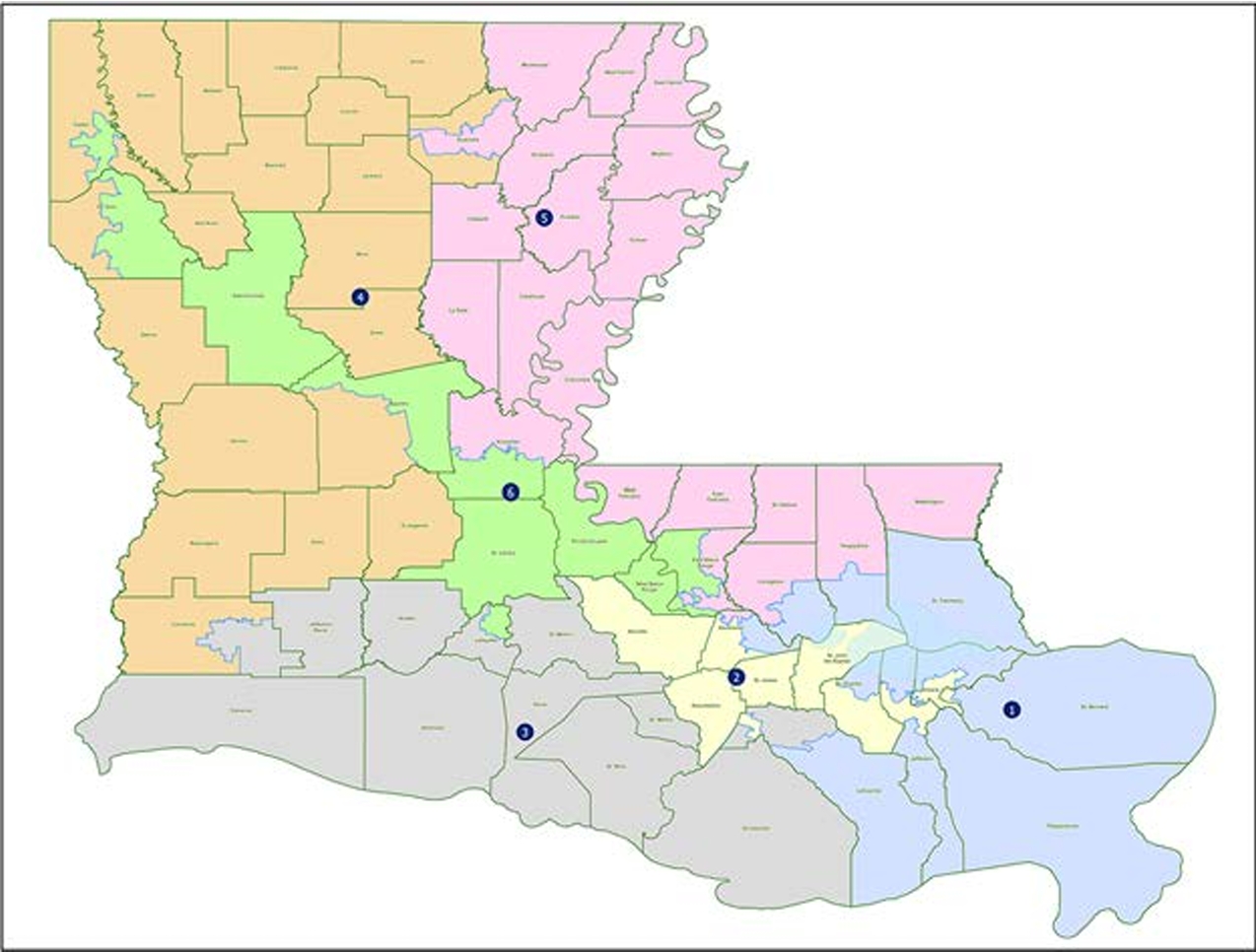
The decision’s consequences have been swift. Already Tennessee has approved a new map disbanding the sole Black majority district in Shelby County (that’s the Shelby County of Shelby County v. Holder in which Chief Justice Roberts did away with parts of the Voting Right Act). That district used to include Memphis, where Martin Luther King was killed in 1968. South Carolina, Mississippi, Alabama, and Louisiana are on their way to ridding themselves of Black majority districts, not, of course on racial grounds but on partisan grounds.
Part of the speed of putting Justice Alito’s Opinion into practice results from the care and detail with which the Justice explained how to do it, explaining that had SB8 been mainly based on the State’s claim that the map reflected its intention of keeping incumbent Republican office holders in office, the map would not have been considered racially discriminating. Instead, the State made the map in order to avoid a racial discrimination charge. Too, bad. The Court had to throw out SB8’s second Black majority district. Now Louisiana can follow the Court’s directions and get rid of the only other Black majority district under the transparent cloak that it is just getting rid of a Democratic majority district.
Besides providing states the proper facts to demonstrate partisanship, the Justice has signal the law to apply. It is not the Fifteenth Amendment, which deals with voting and is usually the controlling law in redistricting cases. That amendment binds too closely to the unconstitutional mistake of referencing the African American race. The controlling law is the Fourteenth Amendment’s equal protection clause — as he points out in rebuttal to Justice Kagan’s dissent — which has the ring and precedence of universal application, a proper law to use for discrimination against the “non-African American voters,” the majority to whom Justice Alito awarded this case.
I wanted (intended) to end by repeating Justice Marshall: “a plurality of the Court concludes that, in the absence of proof of intentional discrimination by the State, the right to vote provides the politically powerless with nothing more than the right to cast meaningless ballots.” But I cannot end without pointing out the weight Justice Marshall places on the word “intentional.” His statement comes from his dissent in the case Mobile v. Bolden (1980). Mobile was the case which reinterpreted the Fifteenth Amendment and its repetition in the then wording of Section 2 of the Voting Rights Act to mean that racially discriminatory state actions against minorities had to be purposeful or intentional to be counted as such.
As a Black man, growing up in a racist society, the first Black Supreme Court Justice, he knew perfectly well that racial prejudice is most pernicious, most socially dangerous, most personally demeaning, when it is so covert and so unconscious that it is done unintentionally and unintentionally propagated and perpetuated. Racism is racism by being unconsciously valued. Thus, when Native Americans were barred from citizenship in the new nation created by the Constitution, it was not racially discriminatory in Justice Alito’s sense but because, it was said, they lacked education and cultural knowledge to function properly as citizens. The same arguments kept women from voting until the Nineteenth Amendment. In both these cases (and Justice Marshall made much of the Nineteenth in his dissent), it is the unintentional discrimination that projects racial superiority and inequality.
In 1982, in response to Mobile v. Bolden, Congress revised the Voting Rights Act. As the Congressional Bill Summary stated, the revision “Restates the prohibition against voting discrimination to include as violative conduct which has the effect of discrimination. Declares that members of a protected class do not have a right to be proportionately represented, but permits consideration of the number of a protected class elected as one of a totality of circumstances which may establish a violation.” That is to say, one looks to effect and not intention to find discrimination. Justice Alito marshals the Fourteenth Amendment against this revised Voting Rights Act, essentially pitting the Fourteenth against the Fifteenth.
This fragmentation of the Constitution is intentional, and it is his Opinion’s intent (meaning). What we can recognize in the Justice’s positions both facially and submerged is that he demonstrates the comforts of his own “post-discrimination” and privileged life (as well those of the Chief Justice and the President) and acts to preserve them.
Perhaps, then, we should end with my other citation, from Justice Blackmun, who agreed with the decision in Mobile v. Bolden but two years earlier had written in University of California v. Bakke: “We cannot—we dare not—let the Equal Protection Clause perpetuate racial supremacy.”
The use of the equal protection clause of the re-interpreted Fourteenth Amendment to enforce majoritarianism is powerful and dangerous. It is powerful because it promotes a comforting way of thinking without discernment, an easy indiscriminate way of reasoning. Thus, it promotes any and all prejudice. We can expect, therefore, that the principle of indiscrimination to expand quickly beyond its application in voting.
The Fourteenth, after all, has universal application to all rights, and that is why it is dangerous. Medicaid, it might be argued, violates the rights of all those who can pay for medical care by clogging the system, allowing the recipients to prevent the majority from getting doctors’ appointments, taking up hospital space, and hogging the use of medical equipment. The Supreme Court could get rid of Medicaid much faster than Congress’s Big Beautiful Bill, which takes medical insurance away from 10 to 15 million people in 10 years. We’ve seen that argument used against undocumented immigrants, and we’ve seen what results. There is no end to the possibilities of what can be declared unconstitutional that Justice Alito has unleashed and whistled for.