
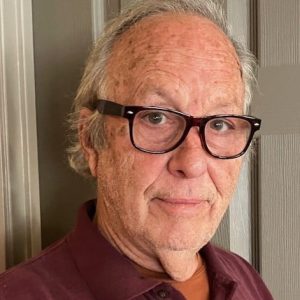
Josif (spelled different ways) Romualdovich Grigulevich started out life on May 5, 1913 in Lithuania as a Karaite Jew — a minority within a minority with a celebrated position in Lithuanian history.
Karaite or Karaim is an almost extinct Turkic language once spoken by Jews, Christians and others around the Black Sea in what is now Russia and Ukraine. Between the eight and tenth centuries of the common era, the Karaite Jews of the Crimean Peninsula broke with other Jews in a schism resembling the Protestant Reformation in the 16th century.
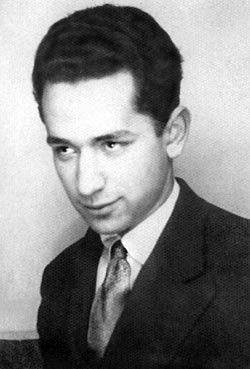
Like other Jews, the Karaites study the Torah — the first five chapters of the Bible — in Hebrew. But they reject the Talmud and other written interpretations of the Torah, believing people should interpret scripture for themselves. Their practices resemble Islamic ones with prayer rugs and full prostration. Lineage is through the father, not the mother. They observe different dietary rules. They refer to other Jews as “Rabbanite.” Karaites once were estimated to make up 10 percent of Jews. Today, there are fewer than 50,000 worldwide (3 tenths of 1 percent), mostly in Israel. The only Karaite Jewish congregation in the United States is B’nai Israel in San Francisco suburb of Daly City, CA.
In the 13th century, a grand duke of Lithuania returned from a military foray against the Golden Horde with a group of Karaite Jews who resettled in Trakai, a Lake District town 17 miles west of the capital Vilnius. They prospered in Lithuania, despite occasional conflicts with Gentiles and other Jews in this crossroads of the Jewish world. After some of these other Jewish families moved to Trakai, the Karaites obtained an order banning them. Later, they successfully petitioned the government not to label them as Jews in the census, but only as Karaites. Nevertheless, they still were persecuted in pogroms.
Grigulevich’s early life was privileged. His father Romuald was a pharmacist in Vilnius. His mother Nadezhda is described only as Russian. It is not known if he had any siblings. He grew up speaking Lithuanian and Russian at home; Hebrew and Karaite in his religious studies, Yiddish and Polish on the streets, and excelled at French and German in the gymnasium grades. But as he reached puberty, his life suddenly changed when his father left for Argentina. It’s not clear what caused the departure. Joseph and his mother moved to Trakai.
As a teenager, he was swept up in the communist movement that aimed for a classless, atheist society.. He became a teenaged street fighter, “liquidating” Lithuanian police informants. Around 1931, he was arrested for revolutionary activities. He was released after a year, but his mother had died and he was told he could no longer live in Lithuania. So he left for Paris and enrolled in college where he spent a year taking general courses. But as Nazism ascended, he was approached by Soviet agents looking to recruit agents in other countries. His first assignment was one he couldn’t refuse: Go to Argentina, reunite with your father, learn Spanish and wait for further instructions.
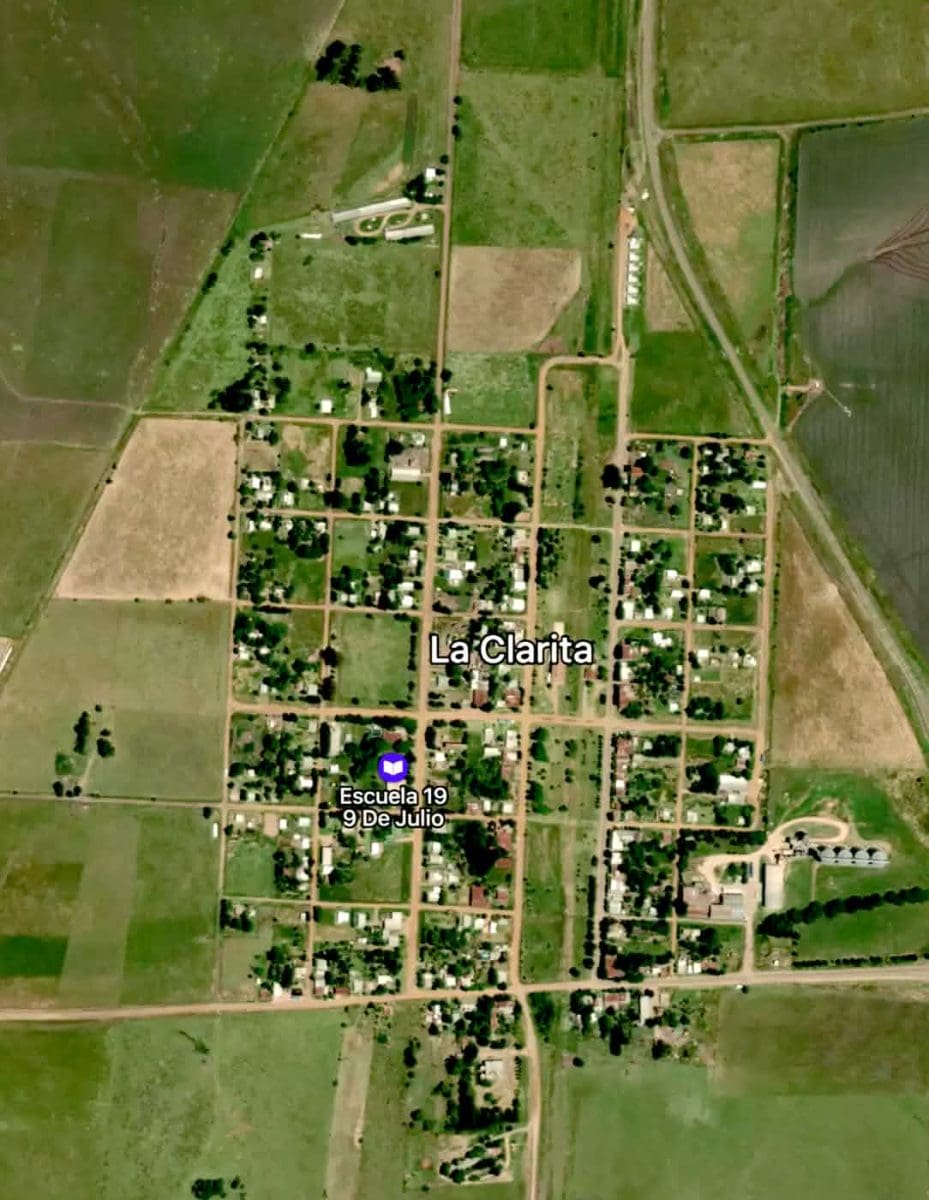
When Josif arrived in 1933, Argentina was among the world’s most affluent nations. After a few days in Buenos Aires, where he probably ate steak grilled over charcoals and watched the Tango performed, he headed north 224 miles into the Entre Rios province of the Pampas to reunite with Romuald. Today, La Clarita has 573 people. Photos remind me of Vaughn, N.M., and like Vaughn, it looks like it was busier in the past. Older maps show a building labeled as a pharmacy. I have written emails in Spanish and English to the Museo Histórico La Clarita, asking about the old pharmacy and its pharmacist from, circa 1926 to 1936. I even offered to pay someone for research, but have received no responses.
Grigulevich became fluent in Spanish and experienced with the small-town pharmacy business. Trips into Buenos Aires acquainted him with young professionals enthusiastic about the Soviet Union and wary of Nazi Germany. In late 1935, Grigulevich was arrested with other young leftists at a residence in a Buenos Aires suburb. He spent a night in jail. Because he was booked under an alias, Jose Escoy, a Brazilian, his true identity remained unknown, so he did not expect it to affect his mission. But his Soviet handlers soon sent him a new identity and ordered him to report to a new job, as a cook’s assistant on a ship bound for Europe, and to the conflict known as the Spanish Civil War.
Sources:
Karaite Jews of America: https://www.karaites.org
Joseph Grigulevich: A tale of identity, Soviet Espionage and Storytelling by Andrei Znamenski, The University of Memphis: https://works.hcommons.org/records/knq7s-xrp21