
Diego Rivera and David Siqueiros were different kinds of communists.
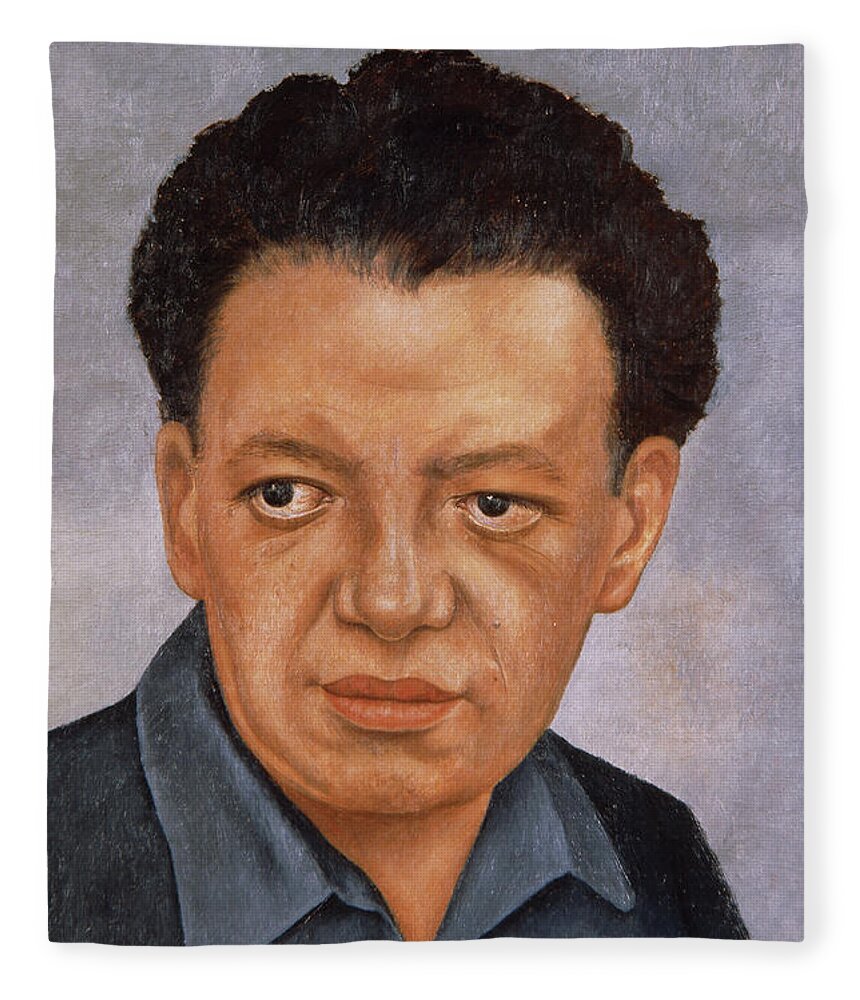
Rivera was a hedonist millionaire who reveled in his celebrity in Mexico, sat out the Mexican revolution in Paris and had what has been called a cheerfully promiscuous marriage with Frida Kahlo.
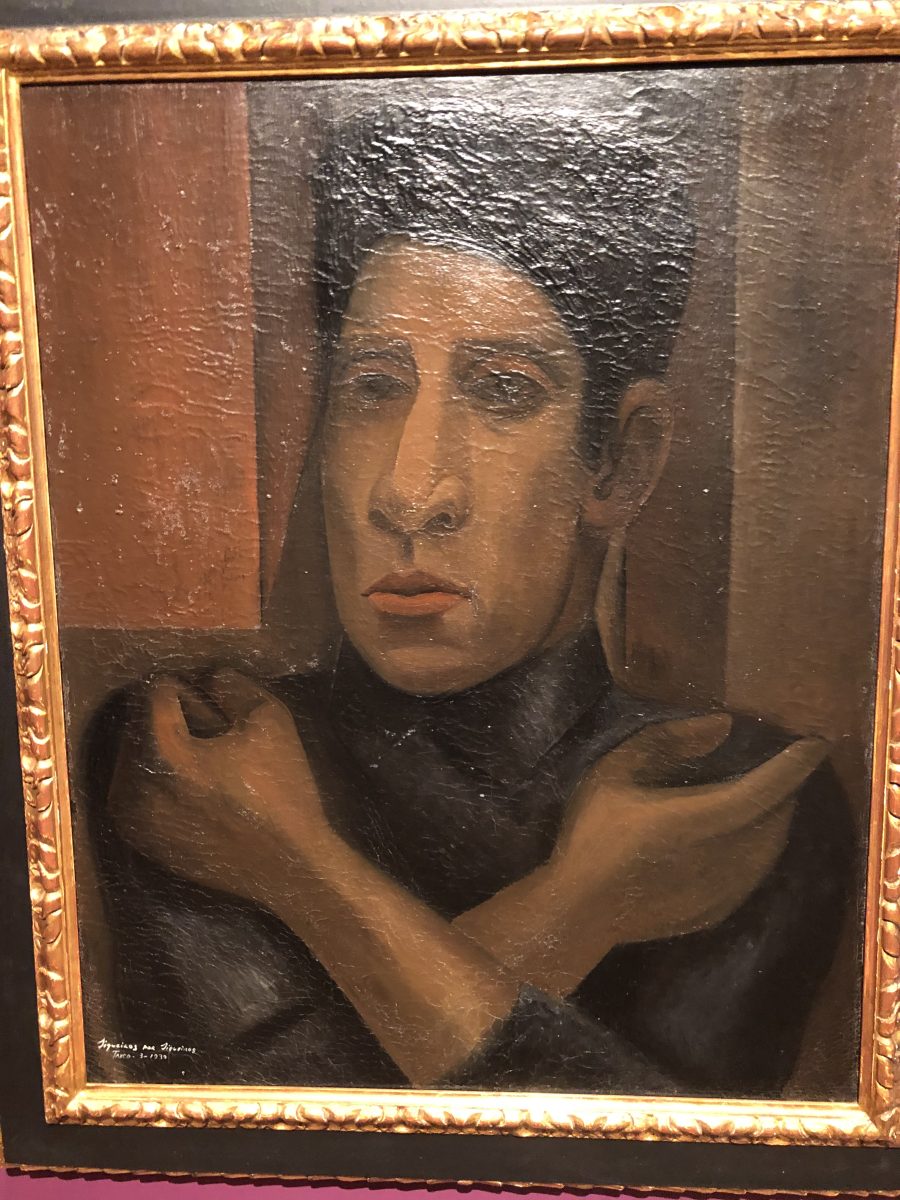
Siqueiros was what we might call a working-class hero, who broke with his landowner father over how he treated his ranch hands in Chihuahua, joined the Constitutionalist Army at 17 and gave up art at the height of his fame to help organize a labor union for his former comrades in arms, the miners of the far western state of Jalisco.
The two men first met in Paris in 1919 when Siqueiros was a military attaché to Mexican embassies in Europe. They traveled together to Italy to study the Renaissance frescoes that would inspire their modernist murals back in Mexico.
Their differences over the Stalin-Trotsky split began in 1928 at a labor conference in Moscow. Stalin met privately with the two artists and Siqueiros was impressed with his ideas about the role of art in revolution. Rivera was more taken with a speech endorsing Trotsky’s ideas by the Spanish labor leader Andreu Nin who would be killed on Stalin’s order nine years later. Siqueiros and Rivera shared a cabin on a ship back to Mexico, but their political discussions became so vehement that they quit speaking to each other and took their meals separately.
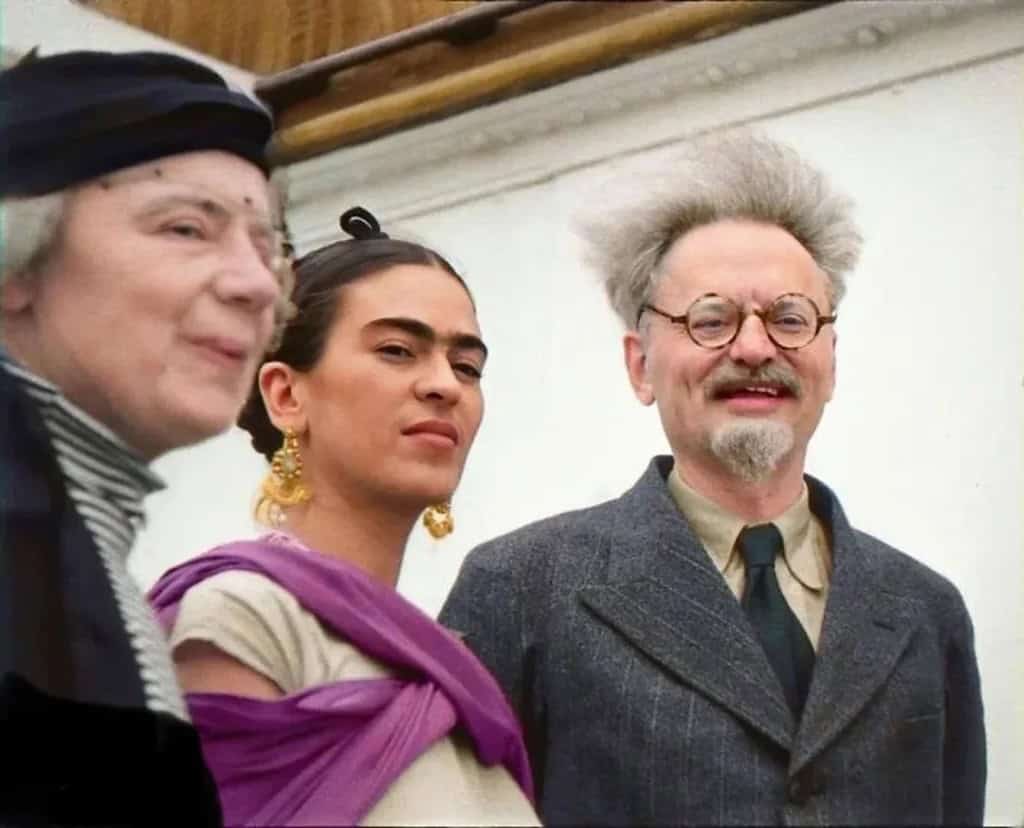
The enmity between the two did not heal even after Rivera changed his mind about Trotsky and began supporting Juan Andreu Almazán, a 1940 presidential candidate opposed to Trotsky asylum. The change came after Kahlo bedded Trotsky while he and his wife Natalia Sedova lived in her “Casa Azul” in Coyoacán. Trotsky and Serdova eventually moved a few blocks away to a T-shaped one-story house with a tower at a corner. Concerned with safety after members of his family and associates were murdered, Trotsky had a 14-foot stone and brick wall built around the property’s perimeter, so that the front door was no longer accessible from the street. Entry was through a gate inside a garage and controlled from inside the courtyard. There was an alarm system with tripwires to activate lights in case anyone got into the courtyard undetected. Police guarded the compound from the outside 24/7. They slept in shifts in a small brick building. Inside the courtyard, Trotsky raised chickens and rabbits. In the study, he worked on biographies of Lenin and Stalin. But he increasingly felt like a prisoner in his own home.
Siqueiros began 1940 in downtown Mexico City finishing up a group mural project at the headquarters of the electricians’ union syndicate. The contract called for “Portrait of the Bourgeoisie” to be finished by the end of 1939, but they were three months behind schedule. Siqueiros, who had agreed to lead the raid to kill Trotsky, didn’t get around to choosing who would join him until April.
In retrospect, the assault on Trotsky’s compound in the early hours of May 24, 1940, may seem like something out of the Keystone Cops — a textbook example of why spy craft recommends against using ideologues.They work for free, but can change their minds and let their hearts rule their heads. But something more strategic is at work here. Siqueiros didn’t want to kill Trotsky. He wanted to turn the masses against him.
Some things to consider:
— There was an air of light heartedness in the apartment where Siqueiros and four of the raiders assembled on the afternoon of May 23, 1940. Three donned police uniforms. Siqueiros and his colleague in mural making, Antonio Pujol, wore the uniforms of Mexican army officers. Siqueiros also wore dark glasses and a fake mustache. Others had instructions to meet up at the Trotsky house at 4 a.m.
— A half dozen Mexican policemen usually were stationed at the Trotsky compound. But two were absent on the night of the attack because two women earlier in the day had invited them to their apartment. I cannot substantiate this yet, but I believe one was Laura Araujo Aguilar, a 24-year-old aspiring actress, originally from Aguascalientes. She would eventually marry Grigulevich, then 27.
— Police on the scene did not seem disturbed by the armed men pushing their way into the compound. They initially thought the uniformed men had been sent from headquarters to check on them. Some were starstruck when they recognized Siqueiros, a war hero and famous political muralist. One of the cops was said to be holding a pistol during.the attack, but did not fire a shot.
— There were hundreds of bullet holes, including 73 into Trotsky’s bedroom, One raider stepped into the bedroom and fired directly into Leon and Natalia’s bed. They had slipped between the bedstead and a wall and were unhurt. Their 14-year=old grandson Esteban “Seva” Volkov’s big toe was grazed by a bullet that passed through a wall into his bedroom. Think about it. Hundreds of shots from new Thompson submachine guns or “Tommy guns.” One minor injury.
— Siqueiros was not above using the incident in personal political feuds. His raiders shouted, “Viva Almazán,” a reference to Diego Rivera’s candidate in that year’s presidential race against Manuel Ávila Camacho.
— The raiders were familiar with the Trotsky compound, but had not been told what they were expected to do. When one asked how they would get by the gatekeeper, Siqueiros said he had been bought off.
Sources:
The Assassinations of Leon Trotsky: David Alfaro Siqueiros (S2E1) by Gavin Whitehead, posted in artofmepodcast.com
October 30, 2023
Siqueiros: Biography of a Revolutionary Artist by D. Anthony White, self published in 2008