

T & D Services of Albuquerque gave its second presentation of the results of its $550,000 study at a special public session that was supposed to be held after the city’s Feb. 25 regular city commission 4 p.m. meeting.
The special meeting was scheduled for 5:30 p.m., but public comment on another matter lasted for two hours and 15 minutes. T & D’s session didn’t start until 6:30 p.m., with only me and one other member of the public going to the mic to speak or ask questions,
This was disappointing, because I have a pin-headed understanding of electricity and I was hoping fellow citizens would add needed critical thinking to the public exercise.
The city posted this article with links to the study on its website, which gives a good overview of the study and the city’s intentions:
https://www.torcnm.gov/news_detail_T12_R130.php
I have a few things to add.
Finances
The city commission, for generations, transferred millions out of the electric fund to pay for deficit spending in the general fund, airport, swimming pool, golf course and other favored hobbyhorses over the years. I’ve heard several city commissioners refer to it as the “city’s cash cow,” and seen budget sessions in which they wantonly transferred up to $5 million a year, but at least $1.5 million a year out of the electric fund. Until newly hired City Manager Bruce Swingle was hired in May 2021 and put an end to the raiding.
He immediately faced authoring the 2021-2022 budget.
Swingle was understandably panicked that only one out of two 60-year-old transformers was working. It was barely carrying the whole grid and likely to fail when summer and air conditioning demands mounted. All that was being done to replace the transformer was to apply for a grant, which was very unlikely to be given, since city-owned business-like enterprises are expected to be self-supporting. The city never reported what became of this grant.
The electric fund’s cash was also much lower than usual. Instead of purchasing a transformer, the city commission approved spending over $1 million on smart meters, hoping in that way to make even more money from electric customers. Swingle found that instead of more, the city was on schedule to earn $700,000 less that year in electric revenue. I asked but never got answers to my questions whether it was because the smart meters were more accurate and the city had overcharged in prior years or if revenue was less for other reasons. Bo Easley, head of the electric department for many years, vaguely alluded to more customers putting in solar panels, but gave no proof or evidence that this caused the decrease in revenue.
In any case, Swingle did an emergency purchase of a transformer. Emergency purchases are red flags that management is bad and fiduciary responsibility is lacking. They are scrutinized and must be approved by the Department of Finance and Administration.
The people, as a result, are on the hook for a $1.3 million loan with the New Mexico Finance Authority and who knows how much interest for how many years–I didn’t do the city’s homework in reporting that information this time. It is also unknown how much it cost the people in cash to have the transformer installed. That too was not reported.
Swingle, soon after, approached the Sierra Electric Cooperative about possibly purchasing the city’s electric facility, figuring the city needed millions to fix the water and sewer crises. Swingle never presented the idea of a sale to the city commission or the public. It became known when the city commission voted affirmatively to split the costs of studies to evaluate whether the city or Sierra Electric wanted to sell or purchase.
Over the next three years five studies were conducted, with no information given to the people. Finally Mayor Rolf Hechler announced there would be no sale because “we don’t know enough.” I made document requests for the studies and was told none existed, that the city never got copies. A source at Sierra Electric told the Citizen, insisting on anonymity, that the city had no records. The age of equipment, maintenance logs, asset management plans–nothing. Sierra Electric, unlike the city, is overseen by the Public Regulation Commission, with equipment replacement and inspection requirements, etc. If it bought the city’s facility, how could it satisfy those requirements? No doubt this brought down the city facility’s worth and Hechler had mentioned in passing at a city meeting that $14 million was the base price needed to make the sale feasible.
Since 2022, as a result of the transformer fiasco and the city commission’s exposure to Sierra Electric’s superior management and planning, the electric fund has stopped being raided and money has been churned back into the system.
In addition rates were increased significantly Jan. 1, 2024.
City Manager Gary Whitehead reported at the Feb. 25 public session on the T&D study that the electric fund now has $4 million in it, with access to $1.5 million more in the joint utilities fund for capital projects.
It’s curious that the electric fund is so fat in two years. The city hired 1898 & Company in 2022 to do an electric rate study that resulted in the Jan. 2024 rate increase. The study was overseen by their engineer Craig Brown, who was not asked to compare the city’s rates with others throughout the state, but to base rates on revenue needed to fix the long-neglected electric facility. Brown noted that the city, for years, had transferred out, on average, about $1.5 million in rate receipts a year. He said the same amount in repairs needs to be made each year for at least five years to keep the utility operational.
The city has accrued $4 million in two years when $3 million was projected, and that amount was supposed to be spent on repairs.
I recall that Easley, when asked about capital projects and repairs by Hechler during the May 2024 budget session for the 2024-2025 fiscal year, said the T & D study would determine what was to be done. Still, in the unlikely event that Easley spent none of the projected $3 million excess in two years, the money accrued is $1 million more than the rate study estimated. Why is that, curious rate payers may want to ask their elected officials.
In recent city commission meetings, when the dire state of the water and wastewater infrastructure were being discussed, the notion of borrowing money from electric fund coffers has been mentioned. Is this a return to the ‘cash cow’ mentality? Overcharge electric rate payers and then use that money to cover deficits. Good governance would look to run business-like enterprise funds, such as electric, water, wastewater, airport, swimming pool and golf course, so that rates and fees cover operations, maintenance and capital projects. Good governance would not raid or transfer out money from enterprise funds. Good governance would not charge higher fees than needed. Good governance would not exploit, but serve its citizens. Government is not supposed to make a profit. Government is not a business and citizens are not customers.
Water and wastewater infrastructure capital project needs are outpacing the $3 million general obligation bond passed in 2022 and massive rate hikes over the last five years. The city commission will soon rule on a rate study that proposes another 15 percent to 25 percent rate increase. And water and wastewater may need to borrow from the electric fund in addition to that. This is what the “cash cow” mentality has wrought.
Hopefully Whitehead’s cultivation of the South Central Council of Government’s team of grant experts will result in federal and state grants for the electric facility, if it is to remain the cash cow.
The SCCOG recommended the city apply for a $12 million U.S. Department of Energy grant, created in 2022, which is described on that department’s website:
Grid Resilience Utility and Industry Grants support the modernization of the electric grid to reduce impacts due to extreme weather and natural disasters. This program will fund comprehensive transformational transmission and distribution technology solutions that will mitigate multiple hazards across a region or within a community, including wildfires, floods, hurricanes, extreme heat, extreme cold, storms, and any other event that can cause a disruption to the power system. The program will prioritize projects generating the greatest community benefit in reducing the likelihood and consequences of disruptive events.
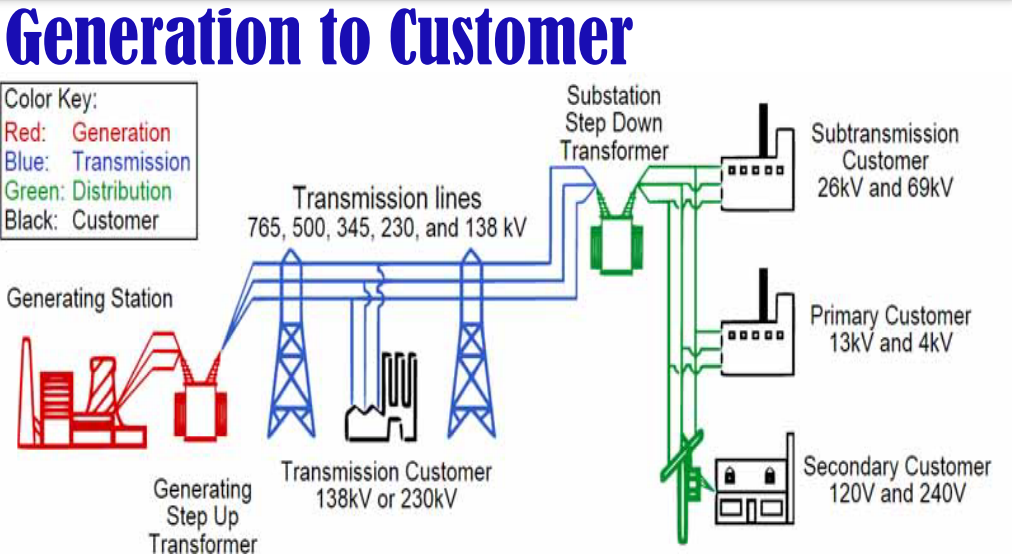
The New Mexico Finance Authority is overseeing the state’s portion of these federal grants and $12 million is evidently the maximum for which the city may apply. If received, it will be used to replace conducting/transmission wire with much better insulated wire, rebuilding the remaining 60-year-old transformer and creating a second substation, probably at the north end of the golf course.
Whitehead, in an interview with the Citizen, noted that in an electric system “heat equals loss.” T & D did the electric facilities’ 2015 study, which estimated about 19 percent of energy was lost in transmission. Replacing the transmission/conducting wire will make the system much more efficient.
The city is also seeking a $2.5 million NMFA Colonias Infrastructure Grant to address some of these same needs. The city website states the money will be used “to renovate the existing substation, rebuild the current transformer, and add a third transformer to create redundancy.”
T & D study findings
T & D was hired not only to evaluate the facility, but to identify and tag every piece of equipment, which is why the study cost over half a million dollars. A computer model/asset management program was developed in the process, which City Manager Gary Whitehead said will henceforth be kept up to date, with maintenance, repairs and replacements regularly recorded.
T & D used the model to game out stresses to the system and results. One such scenario was one of the two transformers going out, which found that the remaining transformer could handle the whole city but could fail in summer when demands are greatest.
Another set of scenarios was if one of the six main underground “feeders” went out. The city grid has six sections, fed by six feeders that fan out from the two transformers. Even trying to calculate the results pointed out a lack in the system–a need for “feeder meter relays” that track and read the amount of power going out of each feeder to the sections. T & D recommended purchasing this equipment. Two of the six sections, Broadway and Williamsburg, would have major issues in 2040 and 2045 respectively, the study showed. By 2030, T & D Engineer Willie Lopez said, “you would have to limit the load” going to these sections.
The fix for the 2030 load limit issue, said Lopez, “is to upgrade the feeder conductor [wire or underground cable] to balance the load voltage.”
I asked Lopez how one or two of the sections got unbalanced. A different T & D engineer said, during the October 25 presentation, this unbalancing is what the city should fix first since it creats the greatest loss in energy transmission. Lopez said the city has “a three phase system” or three wires on the main trunk lines. “But you can’t put three wires everywhere,” Lopez said. On side streets you may have one wire that feeds 10 homes. In that section your intent would be to have the same number of homes feeding off a single wire, but inevitably this can’t be done and the system gets out of balance.
Lopez said it couldn’t get or incorporate the city’s smart meter information into their study, but that similar to feeder relays, this data could pinpoint, down to the house, how to re-balance the system.
The study also found that the city’s substation, with the two transformers, had catwalks that are no longer needed in the upper reaches that give access to potential saboteurs, which they recommended be removed as soon as possible.