
Josif Grigulevich played a lethal game of office politics.
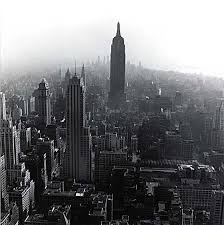
Stalin’s purges mostly had ended inside Russia by the late 1930s. But the diplomatic and intelligence agents stationed in New York City, some of the Soviets’ most educated and capable, were left largely unscathed until Grigulevich arrived from Santa Fe in late 1938.
A September 14, 1938, cable from the New York KGB (Committee for State Security) office suggested inviting Grigulevich (code name Yuz, shortened from Yusuf) to New York. “Yuz has been completely thrown off by his uncertain situation and he is extremely nervous,” it says. “I think he needs to be informed of the state of affairs in regard to his use and receive replies to the inquiries he sent by telegram.”
Generally, illegals and legals avoid contact. So it is unusual for an illegal like Griigulevich to be welcomed into the legal office and allowed to criticize its staff, even the office chief. The exception was due to his direct connections to Moscow.
On December 13, 1938, a KGB agent code-named Kurt wrote to his Moscow bosses to say that when he met with Grigulevich in New York, he accused KGB science officer Gaik Ovakimyan (code name: Gennady) and office chief Peter Davydovich Gutzeit (code name: Nikolay) of turning corrupt due to their long tenures in New York. He estimated that 40 percent of their sources were “obvious Trotskyites.”
“Yuz started in the very first minutes to talk about the shortcomings in the system of the Amer. station’s work, criticizing such things as the lack of adequate rules of covert work, citing as an example the careless way in which Nikolay came to meetings with him. …,” Kurt wrote.“Then Yuz proceeded to a discussion of the general, politically harmful line of Amtorg (the Soviet trade office) and its head, noting that (D.A.) Rozov is, in Yuz’s view, a recruited Trotskyite … (and) is in contact with the leader of the Trotskyite organization in the US (writer and editor Max) Eastman. … (and) that Nikolay … is the protector of this gang. … Either Nikolay indeed is a protector of enemies, or Yuz himself is no less our enemy.”
Other sources had accused Gutzeit aka Nikolay, who had been called back to Moscow before Grigulevich arrived in New York, of having a “neg. attitude,” often leaving work, not attending party meetings and avoiding “work in groups,” according to an undated cable that adds without comment that Gutzeit was “executed by shooting.”
On January 30, 1939, Grigulevich wrote to Moscow himself: “Gennady (Ovakimyan) has asked several times what was going on in Moscow. He cited names that were arrested or expelled from the party. Yuz didn’t reveal anything.”
Despite Grigulevich’s criticism, Ovakimyan continued to thrive in the New York office. He was promoted to chief of scientific intelligence in the U.S. while getting a doctorate in chemistry at New York University in 1939. Then, on May 5, 1941, as he prepared to leave for Moscow, he was arrested by the FBI while meeting with a KGB source turned by the by FBI. He was released May 13 after posting $25,000 bail, according to an article from the New York Herald Tribune cabled to Moscow. He did not have diplomatic immunity because his KGB cover was as an agent for Amtorg. But as the office began to burn his documents, history intervened. Germany invaded the Soviet Union. Charges against him were dropped in exchange for the release of two detained Americans. The episode seemed to restore confidence in the agent. Back in Moscow, he became head of the NKVD’s American desk, in charge of nuclear espionage. He was the handler for Julius Rosenberg (code name: Liberal). He eventually left the intelligence services to work as a chemical engineer.
In September 1939, a new cable from New York advised recalling Grigulevich and another “underground” agent because they had revealed their identities to an agent “suspected of Trotskyite activity.” But Grigulevich was not recalled. He was back in Santa Fe by then, preparing for Mexico.
Sources:
The Venona and Vassiliev documents are a trove of information about Cold War espionage, consisting of thousands of telegraphic cables between Soviet intelligence in Moscow and agents around the world, 1940-1980. You can search them online at:
https://www.wilsoncenter.org/article/venona-project-and-vassiliev-notebooks-index-and-concordance .
The U.S. Army started the Venona (a nonsense word) Project in 1943 and broke the Russian Soviet code in 1946. The National Security Agency closed down the project, but kept it secret until the 1990s. Also in the 1990s, after the Soviet Union dissolved, Russia briefly opened its intelligencer archive to scholars. Alexander Vassiliev, a former Soviet intelligence operative, was among those who obtained permission to go through files in the intelligence archive and take notes.
John Earl Haynes, a political historian for the Library of Congress, obtained Vassiliev’s notebooks, merged them with the Venona decryptions, and developed a combined index and concordance, linking code names with real names and backgrounds. He now lives in Santa Fe and has been a valuable source for me.
Because this trove is in the process of being transferred from the Woodrow Wilson Center to Harvard University and George Washington University, the Vassiliev notebooks may not be available online currently. All of the references in this installment are from the Vassiliev notebooks.