

If you are willing to take the risk, you’ll probably win a court case seeking the property right to have a tiny home in T or C.
You could argue the city commission was indulging in “spot zoning”– favoring one owner but not others–carving out an exclusive exception from the law for an individual. It would be easy to claim favoritism, since the city commission made no findings of fact for the basis of their decision.
Arguing the broader “equal protection under the law,” the 14th Amendment, could be forced to federal court, and you wouldn’t want the extra time, expense and travel, but it too would probably win in court.
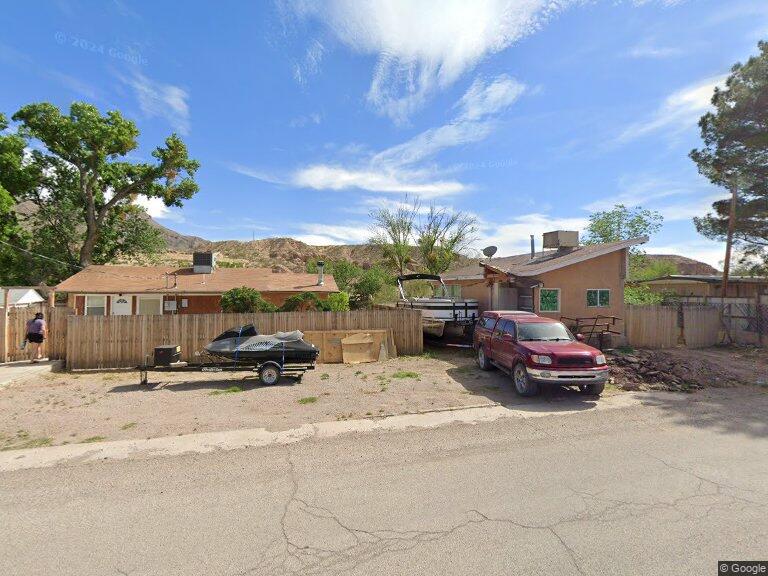
The city commission didn’t use the Battershell method to conduct a land-use hearing held during its May 27 city commission meeting. An applicant was seeking a variance–to have a 467 square-foot home at 1199 E. Riverside Dr. City code requires single-family homes to be at least 800 square feet.
If the Battershell is applied correctly, it greatly improves the chances that the city commission is conducting a hearing that protects all parties’ due process rights in a land-use hearing, which must be publicly heard by law.
In making land-use decisions, such as on variance applications, the city commission sits as a body as judges presiding over a quasi-judicial hearing. They are supposed to hear testimony from city staff, from proponents and opponents, and all parties are supposed to be given an opportunity to question the other.
No one is turned away when seeking a variance, although the zoning administrator, Assistant City Manager Traci Alvarez, should be refusing those who do not meet the requirements, as stated in 11-5-5 of the city’s code:
Only owners with narrow, steep, irregular or otherwise physically challenging lots may ask for a variance. As usual, the city commission didn’t even consider this requirement, nor did the Planning and Zoning Board, who heard the case beforehand, voting 2 to 2 on the variance request.
The two votes against were concerned that granting a tiny-home variance would make it impossible to enforce a law passed subsequently. They wanted to wait for such an ordinance to be passed that governed tiny homes.
The city commission, as usual, also didn’t make findings of fact, as required by city code 15-8. The variance:
1. Shall not constitute a grant of special privilege inconsistent with the limitations on other properties in the area of notice;
2. Shall not result in detriment to the public health, safety, or welfare, or be materially injurious to properties or improvements in the area of notice;
3. Is justified because a physical hardship to the applicant is caused by existing size or shape of the lot, by existing structures, topographic or physical conditions on the site or in the area of notice, or if a physical hardship to the applicant would result from strict compliance with this Code;
4. Upholds the spirit and intent of this Code, public safety and welfare will be secured, and substantial justice done;
5. Will not result in the City being caused to absorb costs over and above those typically associated with subdivision approval;
6. Is not contrary to the requirements of state law;
7. Will not cause negative impacts on adjoining properties, properties in the area of notice, or to the public well being.
The owner wanted to fix up the property, but couldn’t get a building permit from Alvarez until he had been granted a variance.
Mayor Rolf Hechler said allowing the owner to fix up the property would improve the neighborhood, an opinion that met the other city commissioners’ approval, since they too voted to give the variance. It could easily be argued that letting tiny homes into the Riverside neighborhood is a downgrading of property values. Riverside has its own special zoning designation of RR, making it arguably the highest-use, fanciest zone in the city.
This is the second time the city commission has downgraded the area. About a year ago it granted a variance that allowed the owner to violate set-back requirements so that he could put a single-family home on a small lot. The owner may now want to put a tiny home there to give him more yard, or to provide parking on his lot, which is required by code, but was an infraction ignored and allowed without a variance by the city commission. Neighbors’ expressed resentment about the owner’s and his visitors’ parking and making noise in the street, but that didn’t move the city commission.
Since no conditions were stipulated by the city commission in granting the variance and no findings of fact were made, any future restrictions on tiny homes are open to contest. You want to put them in a transitional zone? A commercial zone? Make it a short-term rental? Be 200 square feet? Be a converted shed? On wheels? Have at it. The field is wide open.