
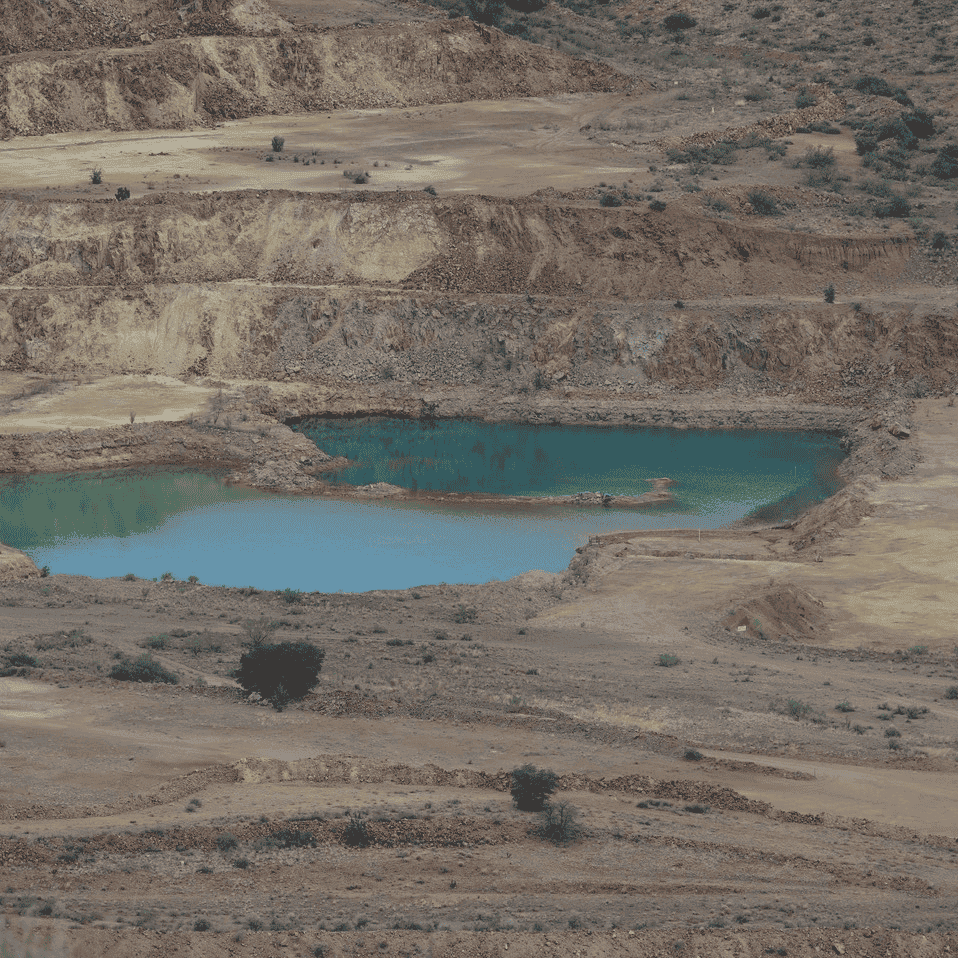

Thanks, Kathleen, for keeping up on this issue: https://sierracountycitizen.org/new-mexico-copper-corporation-will-still-use-a-lot-of-water/. Yes, it is a lot of water, which we should all remember belongs to the people of New Mexico and which we are giving to the mining company to use. This is also true for the copper, gold, and molybdenum. The mining company never paid us for either our water or our minerals. All those mining claims that make up much of Copper Flat Mine are “private property” only because we gave them to the claimants, and even today, about a fifth of the pit is still BLM land, that is, our land and minerals. Yes, they will be using a lot of our water for free and taking our natural wealth to boot.
But water use is managed by laws, and because we, as citizens, have been very lax about the law (not being much concerned until the water stops coming out of our taps and letting “interests” control the legal story of water use), we’ve made laws that are unable to control water use. So, the courts have given NMCC the right to use about 1,100 acre feet of water a year, but if all the rights in this Lower Rio Grande Basin were fully exercised, the water withdrawn from the ground, the whole basin would go dry. There is more paper water than wet water in this basin. This is to say that even without climate change, there is not enough water to go around.
To me that says several things: 1) the legal and administrative system needs change; and 2) projects that use an inordinate amount of water such as Copper Flat Mine – even using dry stack processing – should not be encouraged to carelessly exercise their “rights.” These “rights,” after all, are not God given but given by us. We need to have some way of judging the appropriateness of using these rights. An administrative venue for such a consideration may not now exist. For example, how will the mine pumping 1,100 af every year for 20 years three miles from Caballo Reservoir affect the river flow and the delivery of river water to Texas (in accordance with the Compact)? Unless someone goes to court, no one will answer that question. For that matter, how will having an open pitlake deep into groundwater affect the river flow, part of which is supplied by groundwater flowing from the Black Range to the east?
The legislature has come late to this problem, and even now, their awareness has been the result of a few water advocates and their organizations, today mostly spearheaded by Norm Gaume’s New Mexico Water Advocates. Read his recent posting on how close we, as a state, are to violating the Rio Grande Compact: https://nmwateradvocates.org/from-the-presidents-desk-sliding-closer-to-the-brink/.
Everyone’s use of water affects everyone else’s source. That is what is “common” about water resources.
Those who favor the mine, such as our local elected officials, need to understand the costs of this project not in terms of “jobs” but in terms of our overall need for water to sustain the lives of the people who work those jobs. The groundwater withdrawn for 20 years may not come back, making the future of Sierra County much drier. If it comes back, the right to use that water will not be for the benefit of Sierra County, because those rights will be in the hands of a consortium (already contracted) which will sell the rights on the market at prices we locals cannot afford (the mine, with its access to millions of dollars of debt funding, could not afford to buy more rights in the last 15 years). The certainty of blowing toxic dust all along Animas Creek and Hwy 152 is a cost for us but not for the owners of the mine. Do we really want to cough and wheeze so they can profit, but more important, where do we go with our answer that question if the government is not into equity and fairness?
In a cost/benefit consideration, even the jobs argument turns out not entirely beneficial because they are something of a scam. The economics of a very expensive operation will require operation to follow the ever-changing price of copper, meaning the jobs will come and go with the market. The jobs will not be permanent but temporary, and their durations will be unpredictable. This is what killed mining before at Copper Flat: decades of planning and construction resulted in four months of mining and a total loss in the 1980s.
Kathleen speaks of the boom-and-bust cycles of mining. If we pay attention to water use, we see a detailed explanation of why that is an inevitable cycle even with successful mining: mining uses up the natural resources for a short-term economic benefit and leaves nothing in its wake to keep the local society going. Ultimately, extraction industries extract life from a locale and ship it elsewhere.