
“Negative gearing” is a term in business/investment. Here is an explanation from the Treasury Department of Australia: https://treasury.gov.au/review/tax-white-paper/negative-gearing. Here is a much more comprehensive explanation: https://en.wikipedia.org/wiki/Negative_gearing. Basically, you invest in a losing business venture in order to get tax deductions that offset other earnings with the possibility that the business can turn a profit and be sold at a gain later. I reference Australia because it’s a hot topic there; the government has reformed its income tax to prevent negative gearing in residential housing to bring down housing prices. But Australia is one of a few countries that allows business income taxes unlimited negative gearing. Business income taxes are 30% across the board; so, negative gearing compensates for that. In other countries, negative gearing is restricted by not allowing deductions to cross income categories.
Say you are an Australian businessman who has over several decades built an ever more valuable family business, and you sell it for a huge profit, say $100 million cash. The taxes would be traumatic. Imagine having to pay $30 million taxes. Now you are no longer in that family business but have become a big time investor. You start an investment company with the $70 million left; let’s say you call it My Corp. My Corp can make $14 million a year. That is $4.2 million in taxes a year. You’ve been burnt once by taxes. You start looking to negative gearing investments.
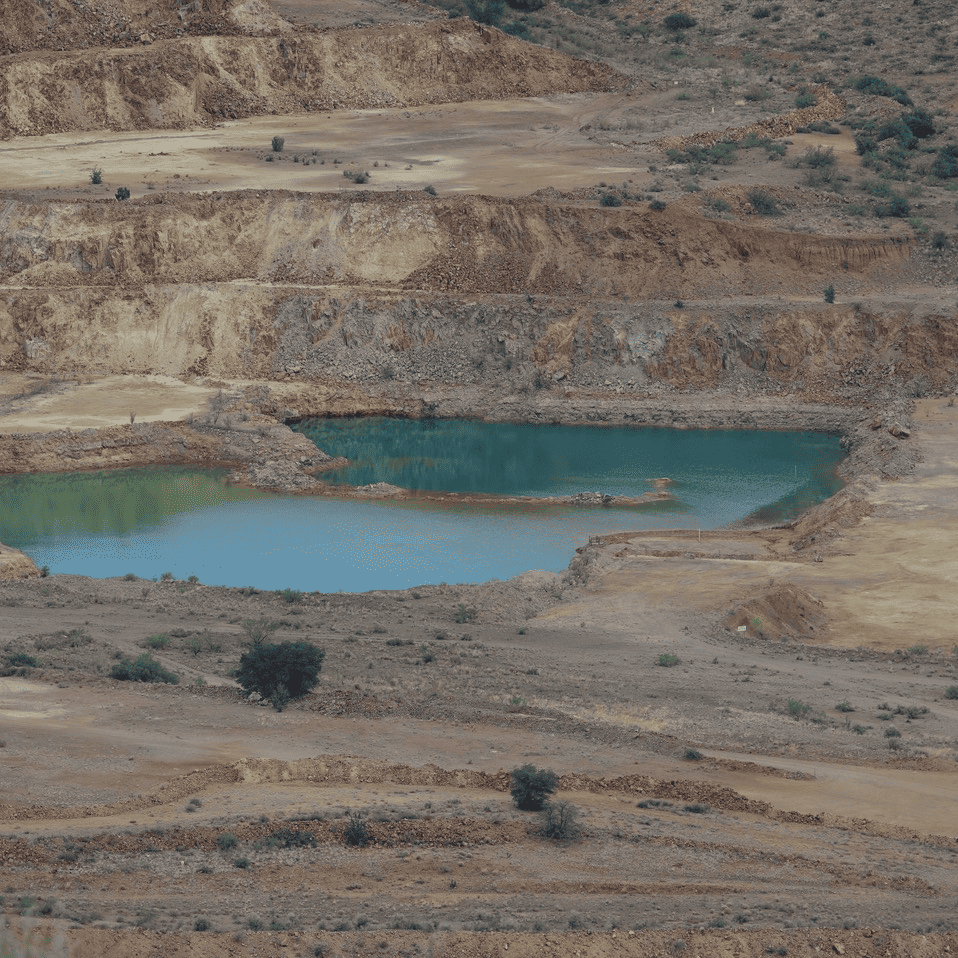
Usually, that means looking in rental real estate. But also you look for defunct mines because mining is speculative, and being speculative, prices in mining swing wildly. What you look for is a marginal mine, a defunct mine that has the possibility of revival should the metal market skyrocket. That way, there is always a way out of a negative gearing investment. Investing is keeping options open.
New Mexico offers many such opportunities. We are a mining economy transitioning out of that economy. Also, almost a third of New Mexico is federal land, open to mining. In New Mexico, there’s a choice. So, you buy a marginal mine in Sierra County, call it Copper Mine, for $10 million, and you form a local, public company called Copper Corp. Copper Corp creates millions of shares, and it gives you 70% of those shares in exchange for the deed to Copper Mine. Now My Corp has a negative gearing investment in Copper Corp. Everything My Corp (the Australian company) spends on Copper Corp (a New Mexico company) is 100% deductible from its taxable income from other sources. For every dollar of income reduced, My Corp saves 30% on taxes due Australia. So that $10 million spent reduced My Corp’s taxes by $3 million.
Now that the negative gearing is set up, it can continue to reduce future taxes. My Corp loans Copper Corp $10 million to do what miners do, explore, hire hydrologists and engineers for permitting, hire lawyers, etc. The loan carries a 20% interest (another advantage of mining over other negative gearing investments is the normally high interest rates on loans).
But Copper Corp has no income (here’s the beauty of it all), so it never pays the yearly interest of $2 million and growing continuously since it becomes a debt on debt. After 10 years, Copper Corp’s debt to My Corp would have grown to $30 million if the loan contract was for a simple interest, but if the loan specified continuous compounding (pretty normal), the debt would be $62 million. Let’s just say $30 million for ease of calculation. The annual unpaid interest on that $30 million debt would be $6 million. It’s all deductible.
After ten years, My Corp can deduct $6 million from its annual income, reducing its taxes by $2 million. Over these ten years, My Corp’s investment has brought it tens of millions in return, year after year, far outstripping its actual investment.
And, during those ten years, Copper Corp has been spending money to get closer to mining, going through the permitting hoops, rebutting litigation, etc. If the price of copper surges, My Corp will be in a position to sell Copper Corp outright for a profit. If the price of copper does not surge sufficiently, the money that Copper Corp spends towards development is spent at a 30% discount.
What does New Mexico get out of this “development”? Very little over ten years. Copper Corp has spent $10 million here, mostly to high income people (lawyers, engineers, hydrologists, consultants, and its own executives). New Mexico’s tax revenues from these spendings would be very minimal, even if these people spent all their earnings here in New Mexico, perhaps $100,000. A few working people’s temporary jobs, perhaps $100,000. No copper. No booming local economy. No Gross Receipts Tax revenues for the state.
What New Mexicans have paid for My Corp’s negative gearing is far more. We’ve paid for thousands of hours of regulators working in multiple parts of the Environment Department, in multiple divisions of the Energy, Minerals, and Natural Resources Department, Department of Game and Fish, Department of Transportation, Department of Cultural Affairs. We pay to do all the technical work for mine planning because the state regulators’ job is to teach the miners what has to be planned to be acceptable for permitting. They are there to inform the miners of the mining laws. Both mining and the mining regulations are complicated, and the more complicated, the more it costs us taxpayers to facilitate mining.
Since local and environmental groups often challenge mining startups, one might want to add to New Mexico’s costs, those litigation costs to the state as well as to individuals.
Also costly for us are the hopes that such projects raise in local politicians, businesses, and developers, hopes that are translated into actual investments preparing for development that does not come. Such hopes often also end in investments directly in Copper Corp, but such investments inevitably fail as a hidden negative gearing company will see its share value drop from initially ranging in the dollars to ranging in the pennies or fractions of pennies. I say that this decline is inevitable because negative gearing can be so lucrative, it never has to end. Eventually, investors catch on, at which point Copper Corp can go private. Copper Corp can buy back its own shares for pennies, but the advantage of negative gearing continues for My Corp, as long as Copper Corp stays a separate legal identity.
Negative gearing is a bane on New Mexico, but in so far as its use is tied to, say, an Australian tax system, there is very little we in New Mexico can do about it except to be aware that this is a problem in mining and real estate.
Endnote: “Gearing” is a metaphor for mechanical advantage and means the same as the same metaphor in the more common investment term “leverage.” It’s often used in association with loans. For example, investors can borrow large sums in hopes of making profits that surpass the interest for the loans. Usually, this means a very short duration buy and sell when share prices are moving in one direction very fast or when you have insider information. That way, the interest on a large loan is very small. This would be a positive gearing.
A variation of gearing is used by people with a lot of money to live on borrowed money because they can earn more with their own money than the interest on the borrowed funds. Thus, they live tax free, never having to cash in their assets to have an income.
Gearing is how our President has lived and invested all his life and how he got to be president. As president he controls the stock market in ways that favor gearing.
Thanks for explaining this. I have heard for years that Copper Flat is a big tax write off for MacWhatever, the Australian family.
For anyone reading this article who may not know, Copper Flat was publicly held but a year ago or so they bought their stock back at pennies on the dollar.
The parallels of negative gearing to leveraging that you draw really, really helped me get it.