
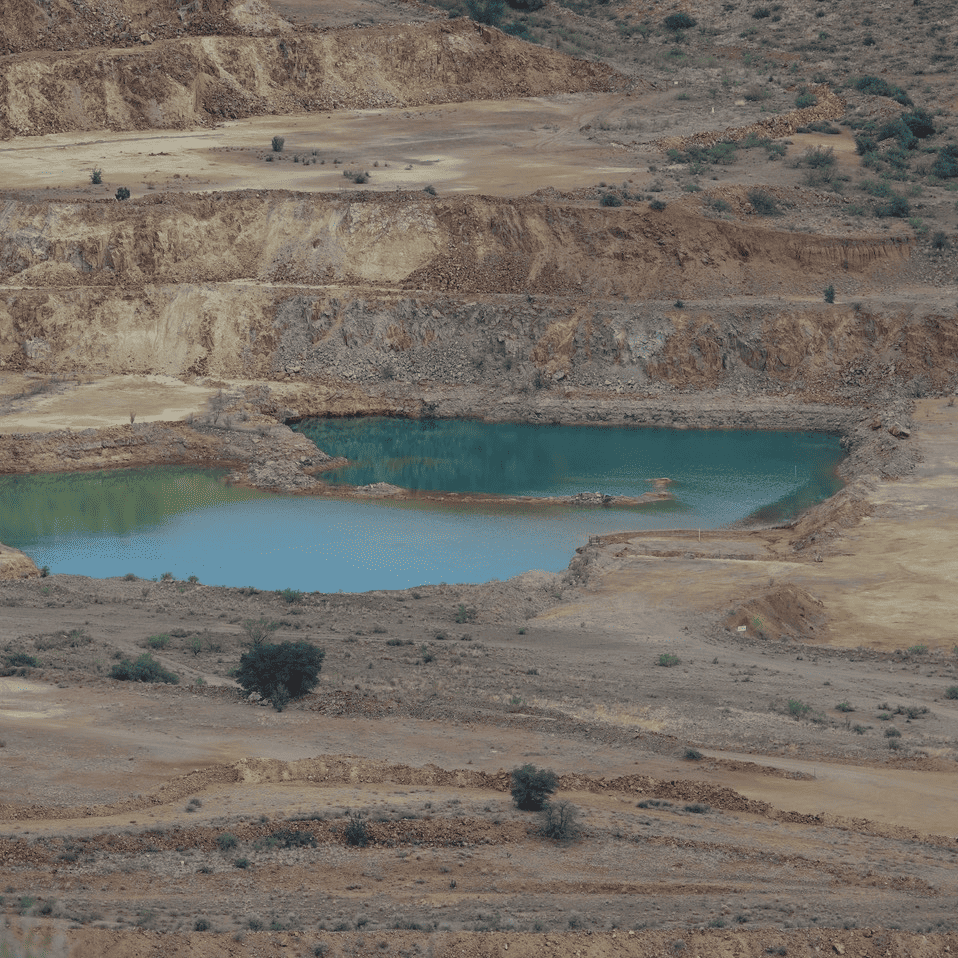

The Mining and Minerals Division (MMD) of the Energy, Minerals, and Natural Resources Department will be conducting a public hearing on the granting of a state permit to operate Copper Flat Mine located near Hillsboro on Hwy. 152. The hearing is scheduled for 5:30 pm at the Hillsboro Community Center on September 17th. The public is invited to participate. Discussion is presumably limited to comments (in person or through writing or both) on the changes to the original application which was vetted by the public in Truth or Consequences in a two-day hearing in 2018.
I will be publishing a series of articles considering this mining application. I begin here with a general overview of the changes the mine owners have enacted since 2018.
In many ways, the updated Mining Operation and Reclamation Plan (MORP) submitted by NMCC to activate its application for a New Mexico mining permit, puts us back to square one. We are forced to look again at the details of the whole operation to understand how and why reopening Copper Flat Mine will benefit and harm us.
NMCC frames its application as simply a change in how the tailings are handled, the use of dry stacks instead of a tailings pond to hold the waste from the extraction process. You will remember that that process was to grind the ore to powder, mix it with water and detergent to make bubbles that float the copper concentrate and leave the junk in a slurry. The copper containing concentrate is skimmed off and sent to a refinery. The left over slurry is the tailings that was held in a pond behind an earthen dam.
This time around, NMCC is using what they call a “dry stack” method of dealing with tailings. The dry stack method takes the slurry and filters it under vacuum pressure to extract supposedly 90+% of the water. This framing allows NMCC to claim a huge reduction in water use, and so there is the claim that they are saving 80% of their water.
But this is not the entire truth, and one of our jobs is to make plain that
1) it’s impossible in reality to save that much water, the industry standard being more like 60% water savings, which is, in fact, less than NMCC originally planned because it originally planned to recycle the water collected in the tailings pond, estimating a 70% savings of water;
2) the use of water is still enough to be negatively impacting the watershed (wells and springs will go dry) and Caballo Reservoir and the whole Rio Grande system (their reduced water use will be three times the domestic water use of Sierra County); and
3) the reduction in available water rights (which forced the mine to use filtered tailings) also impacts other aspects of their whole operation, for example, a) it makes mincemeat of their reclamation plan of “fast filling” the pit (which now will take 2.5 to 3 years), or b) it reveals a hidden source of water which is stormwater harvesting for which they have no water rights.
So, its impact on water in Sierra County is still a major issue, in spite of all the PR about the mine saving water. For that reason, I want to give you a description of the dry stack or filtered cake method used here so that you have a mental picture that helps you understand the technical jargon the upcoming public discussion will be full of. I hope this will inform whatever comments you might make in the upcoming process.
The slush that is the residue of the flotation process is put through what is called a thickener where chemicals (we’d like to know what these chemical flocculants are and vet them) are added that encourage small particles to bond together, thus settling out of the slush by gravity. The clarified water is piped back into the float process, and the thickened slurry goes into a cyclone which uses the water pressure to swirl the slurry separating out the smaller particles that are fed back into the thickener while the slurry is fed into five huge filtering machines housed in an enormous factory building.
There the slurry is pressured through filters. The liquid is recycled and the moist, dewatered tailings (the cakes) are scraped off the filters and put on a long conveyor belt to transport to the dried, old, polluted tailings pond bed of the 1980 Quintana mining operation. There the stacking takes place.
The stack storage facility is about 500 acres. It slopes to the east, and the idea is to deposit the moist tailings on that sloping surface in a way that leaves (after 11 years of mining) that area essentially level but raised by a couple of hundred feet of dried tailings. This is where the whole thing gets tricky, complicated, and demanding. The plan was created by an international firm WSP which bought the consultant firm Golder that has worked at the minesite before. WSP’s studies look better to me than any previous studies at Copper Flat, and they include significant warnings and recommendations that are unmentioned in the upfront application itself and lie buried in the appendices and attachments. The primary engineering issue is stability, but we may have other concerns.
The ground will be prepared to have a layer of soil without large rocks that can damage the 2 mm thick HDPE membrane liner that lies on top of the ground and underlies the cakes. The liner provides both a protection from seepage leaking into the ground and a collector for that seepage. HDPE liners are known to leak and are always technically treated as having a tiny, slow leak. On top of the liner (textured to prevent sliding), is laid gravel as part of the seepage water collection system. Hopefully the gravel will not have any sharp edges. This water is channeled into a seepage pond at the storage facility’s base. What happens after closure and everyone leaves if the seepage doesn’t stop is a bit fuzzy.
On top of that is spread the cakes in five successive stages. Each stage’s area is covered in 18 inch layments until a 60 foot bench is formed on that stage. Then another bench is started. Each bench is smaller than the one beneath it so the benches are staggered on the downslope open edge of the stage. This staggering staircase of benches will prevent slides at that open edge. There will be four benches on each stage, the benches fitting the stages into each other.
The whole process of buildout is continuous, which means that the miners have to manage not only continuous and changing conditions of extending the conveyor system, the spreading and compacting of the tailings and the preparation and building out of the liner system but dust control determined by weather conditions and, formidably, management of the seepage system and the drain system. This latter, means channeling the stormwater run-offs because they need to separate the stormwaters that get polluted by contact with tailings from non-contact stormwater that is channeled into the gulch (creek) that runs through the minesite.
The continuous buildout means that operations do not have to wait for the tailings facility to be built, and it means that stage by stage can be covered and reclaimed while production is going on. That reduces reclamation time and saves on dust control. But it also introduces one of WSP’s worries: that there is a lack of trained personnel to do all this. People who think the mine will bring jobs must consider that many of those jobs are not for us, since local workers are certainly not qualified for this work, and it may be that mine workers in New Mexico generally are not qualified. This will be the first large scale filtered tailings operations in the country.
In my next report, I will address the structural stability problem in this project, mostly following WSP’s concerns, but WSP’s concerns are limited to physical problems because they are engineers. For us, there are more important issues, such as chemical ones. The tailings are toxic in themselves because they are full of acid producing compounds. They are also full of the chemicals used in production, the surfactants used in the floating process, the flocculants used in the thickener, the stuff put into dust control waters to bind the soil’s crust. This means to me that air borne pollution may be a problem, and judging from the response by the NM Environment Department’s air pollution department (which was to ignore our request that they re-examine their permit to NMCC), we may need to find some other way to get this issue into the discussion. Then, of course, there is the water problem, which I will outline in yet another report.
Thank you so much, Max, for this explanation in plain language of what would go on in the proposed Copper Flat mine. You know that such a mine will pollute the area. You also are aware, I am sure, that global demand for copper and consequently prices for copper, are at all-time highs, or near them. I am deeply worried, as you are too, that our small contingent of environmentalists here in New Mexico cannot stand against the pressure of world forces and an administration that is so blatantly pro-development as this one is. But we must try.
Your clear explanations will educate the populace as to this threat. Education will go a long way toward getting people to stand up and fight against this desecration.
You are educating me. I look forward to reading every one of your future articles on this subject.
Avivid Global Water specializes in treating complex mine water using our patented TurboCoag® electrocoagulation technology, which provides a mechanical/electrochemical treatment approach designed to significantly reduce or, depending on the water chemistry, eliminate the reliance on traditional bulk chemical treatment.
Rather than immediately proposing equipment, we’d like to first understand your water and the outcome you’re trying to achieve. Acid mine drainage can vary significantly from site to site, particularly with pH, dissolved metals, sulfates, TDS, acidity/alkalinity, and flow. Please send our information to the correct person if that contact is available for an introduction discussion. I am from Truth or Consequences and our mission is to aid in the efficient treatment of water in mining specifically.
Dear Coleman,
The Citizen isn’t really set up to make business contacts for readers. However, I would suggest you contact the New Mexico Copper Corporation through their parent company, Themac Resources. Their plans do not include any water treatment at all. The present mine is polluting the soil from its operation 44 years ago. I just heard of someone burning their hands on acid from a spring at the site. The company is not planning to do any remediation until after they have mined and only as part of their own reclamation. Would that the mine owners contract you to remedy the situation, now and in the future.
Thank you so much for taking the time and doing this research. It is very much appreciated.
Thank you for your time and research. I hope your engagement will quash thè entire mining plan from all of new mexico. We don’t need anything to poison our disappearing potable water supplies. Many years ago the owner of Animas Creek nursery was deeply involved in shutting down the copper mine due to contamination. He probably did a lot of research alongside Ted Turner. I have a few small farming family members out there very concerned about ground water potability since they rely solely on their wells.