
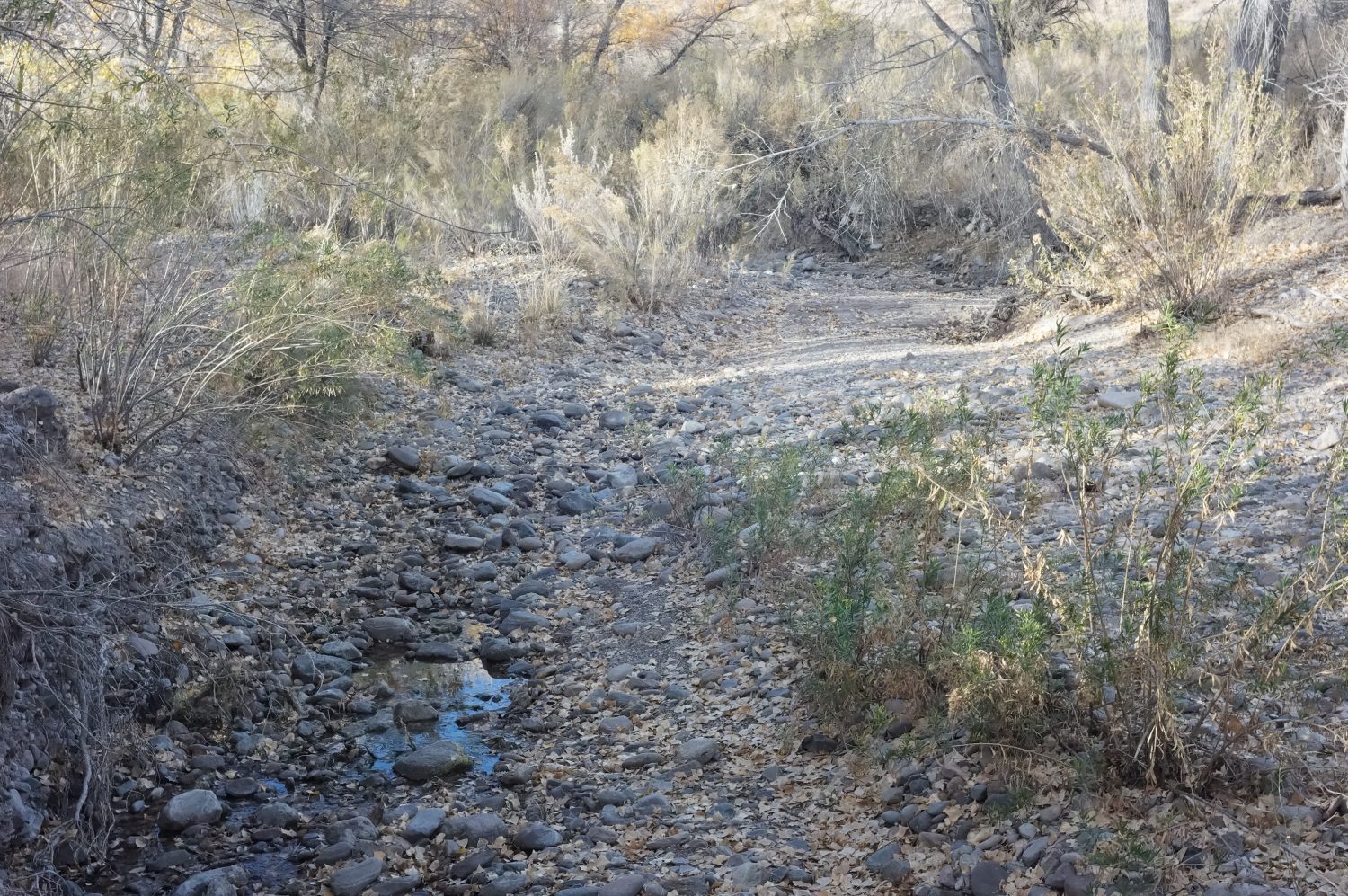
Water is scarce in this semi-desert environment. It is getting more scarce by the day because we like to use energy for our comforts, and we want more and more comforts. We are insatiable. Those we have assigned the task of looking after our welfare know this, and they have made some rules to control our insatiability. For water, they invented the idea that you have to have a right to use water. In southern New Mexico, we have been abusing those rights for decades. Now we will be losing some of them. So as water gets more scarce (and the end of that decline is not to be seen), the rights to use water are also getting more scarce. This is a crisis.
Business and political leaders who speak of development in Sierra County are simply the blind leading the blind unless they have a solution to the water crisis, but they don’t, because they don’t even know there is a crisis.
To see the crisis, click and read Drinking Water, Taxpayers, Pecans, and the Lower Rio Grande Settlement – New Mexico Water Advocates.
After you read what Beth and Norm say, think if you want Copper Flat Mine to use 358,000,000 gallons of Sierra County water every year for 12 years so that new families requiring each about 100,000 gallons every year of Sierra County water can come here for mining jobs. And think about the new real estate agent in town wanting taxpayer grants to build tourist housing for 50,000 to 100,000 visitors a year. Vacation type hotels with spas and pools figure about 75 gallons per person per day water use or more. That is between 3,750,000 and 7,500,000 gallons a day of your water for your visitors, or between 1,867,000,000 and 2,735,000,000 gallons a year of Sierra County water. Do the people who support development know anything at all? We have more than a water crisis on our hands if these are the thoughts of our civic leaders.
It is my understanding that Lower Rio Grande/EBID has been diligent in metering, keeping channels clear of undergrowth that would otherwise suck water, and in reducing evaporation.
It is my understanding that the Middle Rio Grande has neglected to keep channels clear, to eradicate undergrowth, to prevent evaporation, to treat sewer water, etc. that would allow more water to flow downstream.
Why should the people in the Lower Rio Grande bear the entire onus of satisfying the compact settlement?
And is there any movement in the legislature to make it illegal for a governor to make water deals behind closed doors?? To make the state engineer’s decisions on water rights solely based on evidence and facts and the law–applied equally, without favor? To make pecan growers’ allocation the same as the other farmers’?
And what about using the state engineer’s forfeiture powers–to return to the people any water right amount not used in four years? That would significantly reduce the people’s costs in water right purchases, wouldn’t it?
Kathleen,
The people in the Lower Rio Grande Basin are not bearing the onus of all violations of the compact but only their own. The settlement resolves a Supreme Court case in which Texas sued NM because it claimed that NM allowed groundwater pumping near the Rio Grande that reduced its allotted water in the river. That pumping takes place in the Lower Rio Grande Basin because Texas water is stored in the Elephant Butte Reservoir (that is the purpose of the reservoir). The Lower Rio Grande Basin begins at the dam, so all the siphoning off was our doing.
You are absolutely right that the Middle Rio Grande Basin is responsible for taking water that is supposed to go into Elephant Butte Reservoir for Texas. That is yet another violation of the compact that is coming down the road towards NM, but it is a different one. Because river managers recognize that river flows vary year to year, Middle Rio Grande’s water debt to the river is not an annual affair but accumulated over several years. Right now, that debt is accumulating very fast and very near the violation mark. Very soon the Middle Rio Grande will be in violation of the compact and NM (all of us) will have to pay (probably in money) to settle that water debt.
What can we say? In NM we love to live illegally, but now we have been caught sucking up other people’s water. As seems natural, we fight and make up arguments to deny culpability. The settlement is an attempt to get over the whole business, but as a result we do need to give up our unfair practices and that means cutting back on past unfair gains and shrinking our expectations in the future.
As for what else we can do, the forfeiture statute, which in 1965 replaced the traditional common law forfeiture as law in NM requires that the State Engineer give warning a year before seizing water rights (which are protected by private property laws). But the SE has to find these unused, undeclared, publicly unknown rights in order to give warning to the people who might claim them. That is difficult. When such claimed rights do surface because some claimant wants to exercise those claimed rights by using the water, it’s not legally a forfeiture problem (because no warning has been given) but it is an abandonment issue. That means a court case, which is costly for private individuals or the SE’s office or whomever brings suit to challenge the claim. So, the 1965 law on forfeiture is a real impediment (and I think deliberately so), but it is properly based on the fairness principle of fair warning before seizure by the exercise of state power, and who can argue against the inhibition of executive power.
The issue of rights and freedom is so complex because of the complexities of our desires and demands. I think the authors of this article are shortcutting this difficulty by saying that the pecan regulation is “political.” It is not, or rather all public decisions are political. A representative government does regulate what all of us can and cannot do (from speed limits to growing plants for illegal drugs), but we give it that power, and the argument or fight over the limits of those powers is what politics are and always has been.
The word “politics,” after all, derives from the word “polis” meaning the city or the social group that makes up a city, i.e., citizens. Politics are the negotiations between citizens over what their grouping as a city does. If you don’t participate in these negotiations, you don’t want a representative government, or rather, you don’t want the government to represent your desires. This is why being active in politics is the only choice supporting a representative government. Opting out is a choice for authoritarian government. Think of what that means when you hear of judges being attack for being “activists.” It is an attack on the principle of politics, that is, the principle of active engagement in representative government. It is a call for uncontrolled, authoritarian execution of governmental power.
Many thanks, Max. It is a lot more complex than I realized. Bad news about the upcoming compact violations by the Middle Rio Grande. Bad news about the complexities of forfeiture.